Your First Tennis Lesson: What to Expect and How to Arrive Ready
Quick Answer: Your first tennis lesson is friendlier than you think — most adult beginners start in a group clinic of 4-8 people, need court shoes more than a fancy racquet, and hit real (if wobbly) mini-rallies by the end of the very first session. Rallying with a coach or partner typically arrives within 2-4 lessons for most adults, no childhood tennis background required.
You’ve got a “you had to start at eight” story stuck in your head about tennis, and it’s simply not true anymore. Adult-beginner programs are booming, that first lesson is a lot more forgiving than the sport’s country-club reputation suggests, and you’ll be rallying faster than you think.
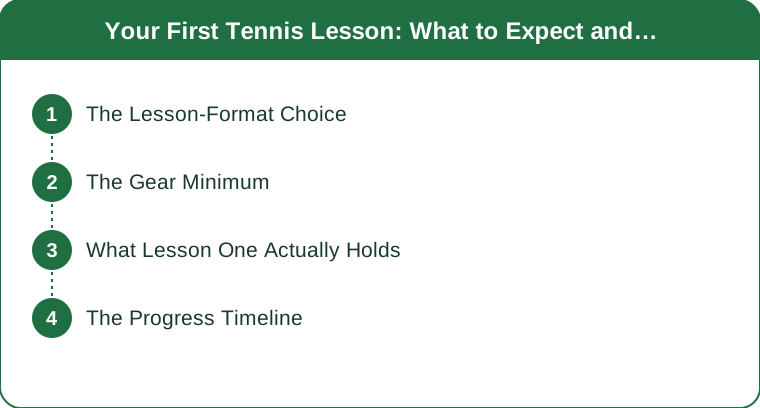
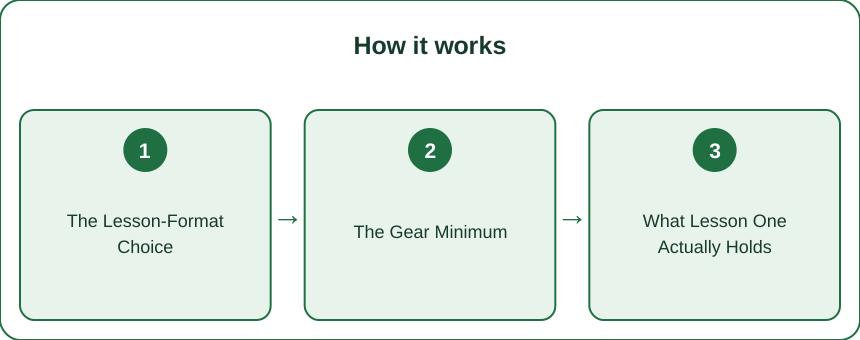
Should I take a group lesson or a private lesson?
For most beginners, group clinics win. A typical adult beginner clinic runs 4-8 people and gives you coaching, built-in rally partners, and a social layer, all for a fraction of what a private lesson costs. Programs branded “cardio tennis” or “love tennis” are literally built for people who have never picked up a racquet, so you won’t stand out as the newbie — everyone in the room is one.
Private lessons have their own case: fastest technical progress, and they’re a smart fit if you’re self-conscious about learning in front of others or your schedule can’t line up with a fixed class time. A popular hybrid a lot of programs use is three private lessons to build the basics, then graduate into a group class — you get individual attention on the fundamentals without paying private rates indefinitely.
For logistics: public courts and community park-district programs run cheap intro series, often well under what a private club charges, so start there before committing to a membership. The whole racquet-sports boom has rebuilt this beginner pipeline in the last few years, and it shows in how many low-cost intro options exist now.
What gear do I actually need for lesson one?
You need less than you think, and here’s the priority order:
- Racquet: borrow or buy a modest beginner-tier racquet — lightweight, forgiving, with an oversized head. Skip the “pro model” heavy racquet; it punishes learning, not rewards it. Many programs will lend you one for your first session anyway, so don’t buy anything before you’ve confirmed you need to.
- Shoes: this matters more than the racquet. Court shoes give you the lateral support your regular running shoes simply don’t have — running shoes are built for forward motion, and tennis is 80% side-to-side. This is the ankle-injury-prevention piece of the puzzle nobody mentions.
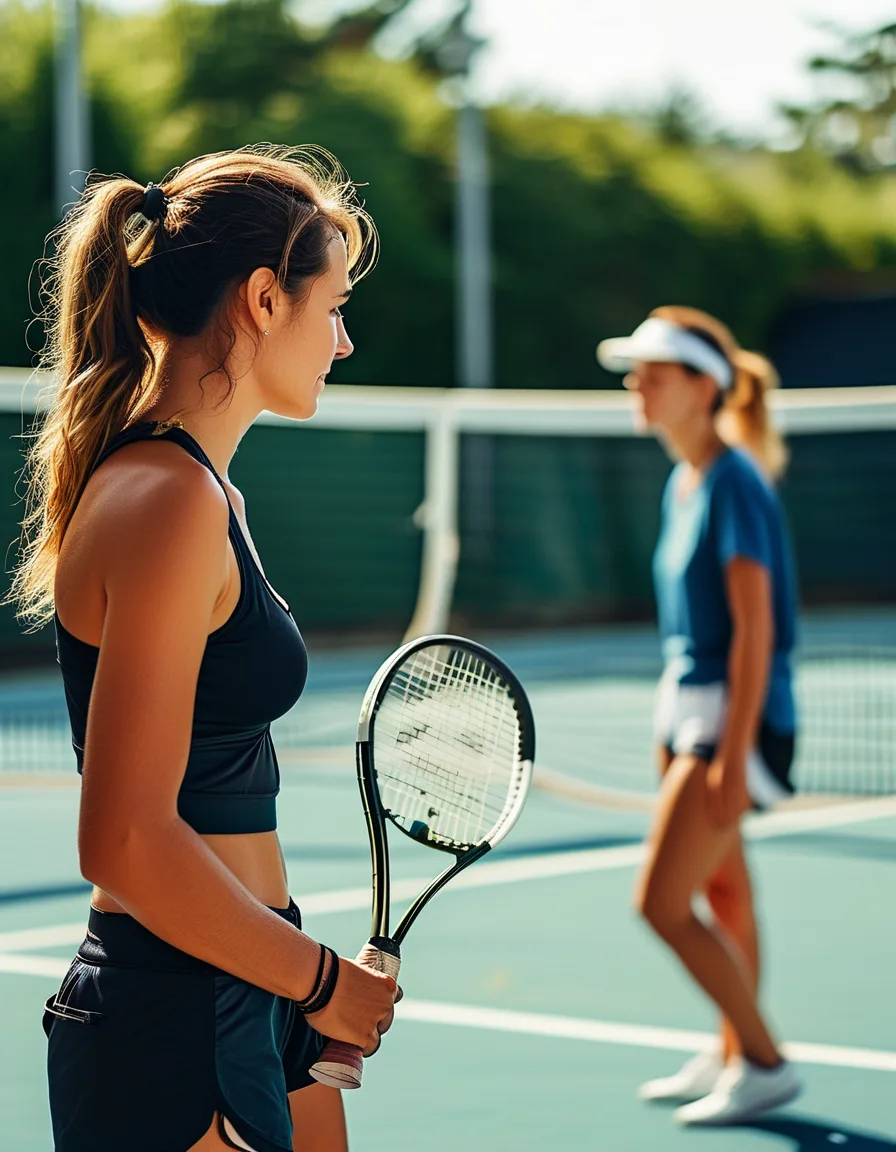
- Clothing: any athletic wear passes at a beginner clinic. This is genuinely the one place the “tenniscore” wardrobe trend earns its keep — a skort with a functional ball pocket stops being a fashion statement and starts being useful.
- Balls: many beginner programs actually use lower-compression balls — slower and bouncier, which makes early rallies far more forgiving. They’re training wheels that don’t look like training wheels.
What actually happens during lesson one?
Here’s the realistic itinerary, not the intimidating version:
- Grip and stance basics — about 10 minutes covering the forehand grip and the ready position.
- Drop-feed forehands — your coach feeds you gentle, predictable balls, and you swing. Real contact happens within the first few minutes, not after weeks of drills. Modern teaching leans toward getting you rallying early rather than perfecting technique in isolation first.
- First mini-rallies — short-court, cooperative hitting by the end of the lesson. This is the moment that turns “curious about tennis” into “signing up for the next session.”
- The universal experience — balls into the net, balls over the fence, and eventually one clean forehand that feels like flight. Your good-shot ratio improves week over week, and that one good shot is genuinely the hook that keeps people coming back.
How fast will I actually improve?
Faster than most racquet sports have a reputation for. Cooperative short-court rallying typically arrives within 2-4 lessons for most adults — tennis’s early rewards come quicker than golf’s or swimming’s, honestly. Serving is the exception: it’s widely considered tennis’s hardest single skill, and a stretch of awkward serves is universal, which is exactly why beginner games and drills lean on drop-feeds for so long.
Once you’re a couple months in, social round-robins and casual match-play are the next step — playing badly on purpose, in a low-stakes setting, is genuinely how playing well eventually arrives. Students who only ever attend structured clinics and never just play tend to plateau faster than the ones who mix in casual matches. There’s a fitness bonus tucked in here too: tennis quietly delivers interval-training-level heart rate spikes disguised as chasing a ball, which is a nice bonus if fitness wasn’t even your main goal.
Myth vs Fact: Adult Beginner Tennis
Myth: “I’m too old to start tennis.” Fact: adult-beginner programs exist specifically because so many adults start later — there’s no age cutoff on group clinics, and cardio-tennis classes especially skew toward first-timers of every age.
Myth: “I need an expensive racquet to learn properly.” Fact: a heavy, stiff “pro” racquet actively works against beginners. The lightweight, forgiving, oversized-head racquets sold for beginners exist for a reason — they’re not a downgrade, they’re the right tool.
Myth: “I won’t be any good for months.” Fact: most adults hit their first real mini-rally in the very first lesson, and cooperative rallying is common within 2-4 lessons. (This is the one that surprises even people who signed up expecting to be terrible for a whole season.)
If you have any joint issues, recent injuries, or haven’t done regular cardio exercise in a while, it’s worth a quick check-in with your doctor before jumping into a physically demanding new sport — and a good beginner coach will happily adjust drills around any physical limitations you mention on day one.
FAQ
Do I need to be athletic to start tennis as an adult?
No — beginner clinics are specifically designed for people with no athletic background in the sport, and coaches feed easy, predictable balls at first so anyone can make contact. Basic general fitness helps with stamina, but it’s not a prerequisite to start.
What should I wear to my first tennis lesson?
Any athletic wear works fine for a beginner clinic — shorts, leggings, or a skort, paired with a breathable top. The one non-negotiable is court shoes, since they provide the lateral support your feet need for tennis’s side-to-side movement.
How soon will I be able to actually play a real game?
Cooperative short-court rallying usually shows up within 2-4 lessons, and social round-robins or casual match-play typically start around the two-month mark. Serving takes longer to feel natural for almost everyone, so don’t judge your progress by that skill alone.
TL;DR:
- Group clinics (4-8 people) are the best value and least intimidating entry point for most adult beginners.
- Court shoes matter more than a fancy racquet — borrow a beginner racquet for lesson one if you can.
- Expect grip basics, drop-feed forehands, and real mini-rallies all in your first session.
- Rallying typically arrives within 2-4 lessons; serving takes much longer for almost everyone.
- Mix in casual match-play once you’ve got the basics — it’s how playing well actually arrives.
- Check with your doctor first if you have joint issues or haven’t exercised regularly in a while.
See It in Motion
Seen here: UPF 50+ Adjustable A-Line Running Skort with Pockets — shop it on bubblelime.com
Keep Reading
This article is for general informational purposes only and is not medical advice. It is not a substitute for professional diagnosis or treatment. Always consult a qualified healthcare provider about your individual situation, especially before making significant changes to your diet or exercise routine.