The Complete Guide to Building a Reliable Pickleball Serve From Scratch
Quick Answer: A legal, reliable pickleball serve requires an underhand motion contacting the ball below waist level, hit diagonally into the opposite service box, with paddle head below the wrist at contact — beyond the legal requirements, consistency comes from a repeatable toss (or drop) and a compact, controlled swing rather than power.
New pickleball players often focus entirely on power when building a serve, when the actual foundation — legality, consistency, and placement — matters far more for winning points than raw speed ever does.

What are the actual legal requirements for a pickleball serve?
The current rules (as of the widely adopted drop-serve and traditional serve formats) require the serve to be hit underhand, with paddle contact below waist level, and the paddle head must be below the wrist at the point of contact. The serve must also be hit diagonally, landing in the opposite service box, clearing the non-volley zone (the kitchen) entirely.
Traditional serve vs. drop serve — what’s the actual difference, and does it matter which you use?
In a traditional serve, the ball is tossed and struck before it hits the ground; in a drop serve, the ball is dropped and struck after it bounces once. Both are legal under current rules, and the drop serve tends to be easier for beginners to time consistently since it removes the toss-timing variable entirely.
What does a repeatable pre-serve routine actually look like, and why does it matter?
A consistent routine — the same stance, the same drop or toss height, the same paddle prep position every time — reduces the variables that cause inconsistent contact. Players who serve differently every time are essentially relearning the serve on every single point, while a fixed routine builds genuine muscle memory over repetitions.
How much does paddle face angle at contact affect where the serve lands?
Significantly — a paddle face angled even slightly open or closed at contact changes the ball’s trajectory more than swing speed does, which is why consistent paddle face control matters more for placement accuracy than trying to hit the ball harder.
Why does serve placement matter more in pickleball than raw serve speed?
Because the underhand serve rule caps how much power is realistically achievable compared to an overhand serve in tennis, placement — deep to the backhand, or short and angled — becomes the primary strategic tool rather than pace, which is a mindset shift for players coming from other racquet sports.
What’s a good progression for practicing serve consistency specifically?
Start by serving to a large target zone focusing purely on legal, in-bounds contact; once consistency is high, narrow the target to specific zones (deep backhand corner, for example) to build placement accuracy on top of the consistency foundation, rather than trying to build both at once.
FAQ: Pickleball Serve Questions, Answered
Is the drop serve considered a beginner-only technique, or do advanced players use it too?
Many advanced and competitive players use the drop serve specifically because removing the toss-timing variable improves consistency at every skill level, not just for beginners.
How important is footwork during the serve itself?
A stable, balanced stance with weight transferring forward through the swing supports both consistency and the ability to move quickly into position for the return — rushed or off-balance footwork is a common cause of inconsistent serves.
What’s the most common mistake beginners make with the serve motion specifically?
Swinging too hard in an attempt to generate power often causes contact point and paddle face angle to become inconsistent — prioritizing a controlled, repeatable motion over swing speed produces more reliable results while learning.
TL;DR:
- A legal serve is underhand, below the waist, with the paddle head below the wrist at contact
- The drop serve removes toss-timing as a variable and is used by players at every skill level
- A consistent pre-serve routine builds real muscle memory faster than varying it point to point
- Placement matters more than raw power in pickleball due to the underhand serve rule
Start your next practice session focused purely on consistency and legal contact before worrying about placement or power at all.
See It in Motion
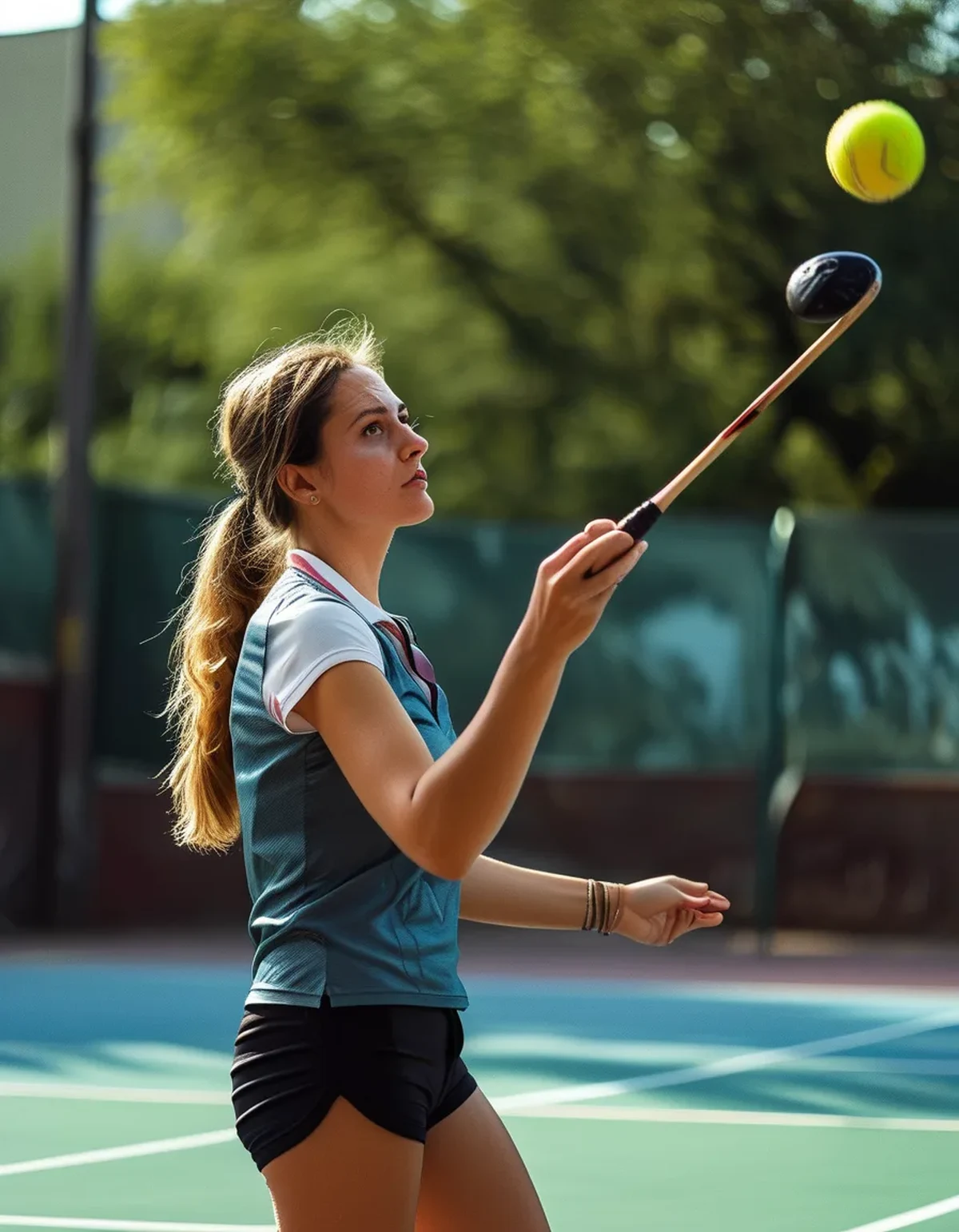
Seen here: UPF 50+ Adjustable A-Line Running Skort with Pockets — shop it on bubblelime.com
Keep Reading
This article is for general informational purposes only and is not medical advice. It is not a substitute for professional diagnosis or treatment. Always consult a qualified healthcare provider about your individual situation, especially before making significant changes to your diet or exercise routine.