Switching Between Pickleball and Tennis: The Complete Guide to Making the Transition Work
Quick Answer: Pickleball and tennis share enough surface similarity — court sports, paddle/racket, net play — that many players assume skills transfer directly, but court size, scoring, and shot mechanics differ enough that regularly switching between them requires deliberate mental and physical adjustment, not just picking up different equipment.
A lot of tennis players pick up pickleball assuming it’ll feel like a smaller, easier version of the same sport. It doesn’t quite work that way — and understanding exactly where the two diverge makes switching between them much smoother.

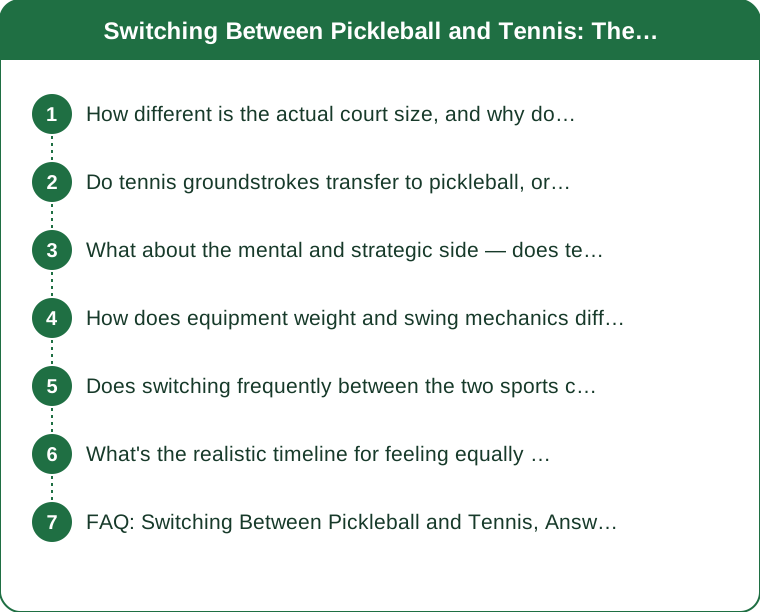
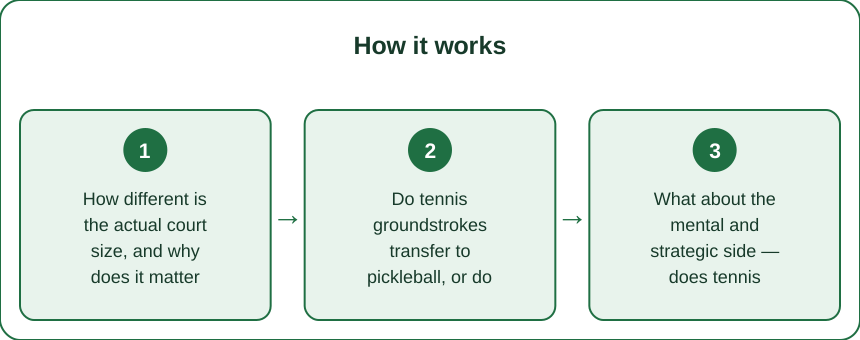
How different is the actual court size, and why does it matter more than it seems?
A pickleball court is roughly a quarter the size of a tennis court, which fundamentally changes footwork patterns — tennis’s wide lateral coverage and long recovery steps become cramped and often counterproductive on a pickleball court, where smaller, quicker adjustments matter more. Tennis players often initially over-move on a pickleball court out of habit, covering ground that isn’t actually needed.
The adjustment period for footwork specifically tends to take longer than players expect, since the movement patterns are genuinely different rather than just a smaller version of the same movement.
Do tennis groundstrokes transfer to pickleball, or do they need to be relearned?
Big, full swings from tennis groundstrokes tend to be a liability in pickleball, where the smaller court and lighter ball reward compact, controlled shots — particularly around the non-volley zone (‘the kitchen’), where a big tennis-style swing is both unnecessary and often results in the ball sailing long. Players transitioning from tennis typically need to consciously shorten their swing significantly, especially for anything near the net.
The serve is a similarly large adjustment — pickleball’s underhand serve requirement is a completely different motion from a tennis overhand serve, and it needs to be learned essentially from scratch rather than adapted from tennis mechanics.
What about the mental and strategic side — does tennis strategy transfer?
Some strategic principles transfer well — shot placement, setting up a point, and reading an opponent’s positioning are broadly similar concepts across both sports. But the specific tactics differ: pickleball’s kitchen rule creates a completely different net-play dynamic than tennis, where aggressive net rushing is often rewarded rather than restricted by a no-volley zone.
Players who lean too heavily on tennis net-rushing instinct in pickleball often find themselves out of position relative to the kitchen line, since the tactical incentives around the net are structured so differently between the two sports.

How does equipment weight and swing mechanics differ between the two?
A pickleball paddle is significantly lighter and shorter than a tennis racket, with a solid hitting surface rather than strings, which changes the feel of ball contact substantially — there’s less natural power generation from the equipment itself, so pickleball relies more on placement and paddle angle than raw swing power. Players used to generating power through a tennis racket’s string bed often find their pickleball shots initially feel underpowered until they adjust their technique to the different equipment.
Does switching frequently between the two sports create bad habits in either one?
It can, particularly with swing size and net-play positioning, if a player doesn’t consciously separate the two skill sets. Some coaches recommend dedicating focused practice blocks to each sport separately rather than switching mid-session, at least during the initial adjustment period, to avoid the habits from one sport bleeding into the other’s very different technical demands.
What’s the realistic timeline for feeling equally comfortable in both sports?
For an experienced tennis player, several weeks to a couple months of regular pickleball play is a realistic timeline to feel genuinely comfortable rather than like a tennis player awkwardly playing pickleball. The footwork and swing-size adjustments tend to take longer to fully internalize than the scoring and rules, which most players pick up quickly.
FAQ: Switching Between Pickleball and Tennis, Answered
Is it better to master one sport before starting the other?
Not necessarily — many players develop both simultaneously, though dedicating separate practice sessions to each helps avoid cross-contamination of technique early on.
Does playing pickleball hurt your tennis serve or groundstrokes?
It can if you don’t consciously maintain separate mechanics, particularly the underhand serve motion bleeding into tennis serve habits.
Which sport is generally easier to pick up first?
Pickleball has a shorter initial learning curve for casual play, but tennis skills built over years don’t fully protect against the specific technical adjustments pickleball requires.
TL;DR:
- Pickleball’s smaller court demands different footwork than tennis, not just less of the same footwork
- Tennis groundstroke swings need to be shortened significantly for pickleball
- The kitchen rule creates fundamentally different net-play strategy than tennis net rushing
- Lighter equipment means pickleball relies more on placement than raw power
If you’re moving between both sports, treat the footwork and swing-size adjustments as separate skills to build, not a simple transfer — that mindset shift speeds up the whole transition.
See It in Motion
Seen here: UPF 50+ Adjustable A-Line Running Skort with Pockets — shop it on bubblelime.com
Keep Reading
This article is for general informational purposes only and is not medical advice. It is not a substitute for professional diagnosis or treatment. Always consult a qualified healthcare provider about your individual situation, especially before making significant changes to your diet or exercise routine.