Playing Tennis in Fall Conditions: Heavy Balls, Cold Hands, and Slower Courts
Quick Answer: Cold air makes tennis balls bounce lower and travel shorter because the gas inside contracts and the air is denser. Below roughly 55F (13C), expect to lose noticeable pace and depth. Fix it with a longer warm-up (12-15 minutes, not 5), dropping string tension 2-4 lbs, hitting higher over the net, and swinging through the ball rather than harder at it.
The first cool week of the season is where good players suddenly look mediocre. Balls die at your feet, your usual depth lands short, and your hands stop feeling the racquet. None of that is your technique falling apart. It is physics, and almost all of it is adjustable once you know which lever to pull.

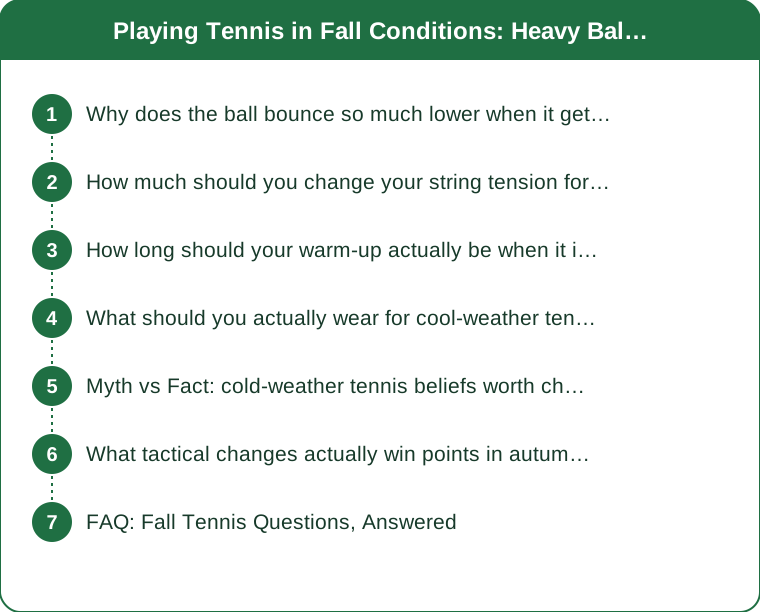
Why does the ball bounce so much lower when it gets cold?
Two things change at once, and they stack.
First, the air inside the ball. A pressurized tennis ball holds its bounce because internal pressure pushes back when the ball deforms against the court. Cold air contracts, internal pressure drops, and the ball deforms more on impact while returning less energy. A ball that bounces to hip height on an 80F afternoon will often bounce to mid-thigh on a 45F morning with the exact same swing.
Second, the air outside the ball. Cold air is denser, which means more drag on the way through and less carry. Your deep crosscourt ball that used to land a foot inside the baseline now lands two feet short - and once it lands short, the low bounce makes it even easier for your opponent to attack.
The rubber core also stiffens slightly, and the felt absorbs moisture from dew or damp courts, which adds weight and drag. A damp ball on a cool morning can feel like it gained a few grams by the third game.
What this means practically: you are not losing power, you are losing rebound and carry. Swinging harder mostly adds errors. Swinging longer through contact with more racquet-head speed and a higher net clearance restores the depth you lost. Aim a full racquet-length higher over the net than you would in summer and watch the depth come back.
How much should you change your string tension for cold weather?
Strings get stiffer as temperature drops, which is the opposite of what you want when the ball is already dead. A stiffer bed means less dwell time, less pocketing, and less of the trampoline effect that produces free depth.
The standard adjustment is 2-4 lbs lower than your summer tension for consistent play below 55F. If you string at 52 lbs in July, try 48-50 lbs for the fall. Polyester strings are the most temperature-sensitive - they stiffen noticeably and lose elasticity faster in the cold, which is why a poly setup that felt crisp in August can feel like a board in October. Multifilament and natural gut hold their feel much better across a temperature swing.
If you play year-round on the same frame, consider a second racquet strung 3 lbs lower and simply switch when the mornings turn. That is cheaper than restringing every few weeks and it gives you an instant answer when conditions change mid-week.
One caution: dropping tension increases power and reduces control, so give yourself a set to recalibrate. Players who drop 4 lbs and then also swing 10% harder end up spraying balls long and blaming the strings.
Also replace dead poly sooner in cool weather. Poly loses tension fastest in the first 24 hours and keeps drifting; a cold court exposes a tired string bed immediately.
How long should your warm-up actually be when it is cold?
The five-minute mini-tennis warm-up that works in summer is genuinely inadequate below about 55F. Muscle temperature drives how fast a muscle can contract and how far a tendon can safely lengthen, and cold ambient air means you start further from that operating point.
A workable structure is 12-15 minutes total:
- 4-5 minutes of general movement before you touch a racquet. Skips, side shuffles, easy jogging along the fence, arm circles. The goal is to break a very light sweat before your first ball.
- 4 minutes of mini-tennis from inside the service boxes, with full follow-through rather than blocked pushes.
- 4 minutes of gradual full-court rallying, starting at maybe 60% and rising.
- 2 minutes of serves, starting at half pace. Serving is the single most common cold-weather injury point because it loads the shoulder and the trunk at maximum range while everything is still tight.
Shoulders, calves, and the lower back are the three areas that complain most in autumn tennis. Calf strains in particular spike in cool conditions - the classic scenario is a push-off for a wide forehand in the first three games.
If you only have limited court time, take the warm-up out of your rally time, not off the front. Playing points ten minutes later is much cheaper than a six-week calf recovery.

What should you actually wear for cool-weather tennis?
The mistake is dressing for standing still. You will be significantly warmer four games in, and a heavy jacket you cannot take off mid-set becomes a liability.
Layer in three removable pieces:
- A fitted long-sleeve base that moves with the swing and does not bunch at the elbow. This is the layer that stays on all match.
- A light mid layer - a quarter-zip or thin fleece - that comes off after the warm-up.
- A wind-resistant shell for changeovers, sitting in the bag once you are hot.
Below the waist, most players are fine in the same skirt or shorts they wear in summer down to about 50F, especially with a fitted legging underneath. Legs generate heat and stay warm through movement far better than hands do.
Hands are the real problem. Grip feel disappears before your body ever feels cold, and you cannot control a racquet you cannot feel. Keep a spare dry overgrip in the bag, and use a glove or hand warmer between points rather than trying to play through numb fingers. Some players keep a second ball can inside a jacket to keep at least one ball warmer between games.
A cap loses less relevance in fall, but sunglasses matter more - the sun sits lower, and a low autumn sun directly behind a serve toss is genuinely blinding in a way the summer sun never is.
Myth vs Fact: cold-weather tennis beliefs worth checking
Myth: New balls fix everything in the cold. Fact: fresh balls help, but a new ball in 45F air still bounces lower than a used ball in 80F air. New balls restore some pressure and felt quality, not the physics of dense cold air. Open them anyway - just do not expect a summer bounce.
Myth: You should swing harder to compensate for the dead ball. Fact: harder swings in the cold produce more mishits, and mishits on a stiff cold string bed transmit more shock to the arm. Swing longer, not harder - more racquet-head speed through a longer contact path, with a higher target over the net.
Myth: Keeping balls in your pocket warms them meaningfully. Fact: it helps a little for a game or two, and it is genuinely better than leaving them on a cold court surface. It is not a fix, it is a small edge - and a real one in a close match.
Myth: Cold weather is bad for your serve, so serve conservatively. Fact: cold air reduces carry, which actually means flat serves stay in more often and kick serves sit up lower. The first serve percentage often goes up in fall. What suffers is the kick serve as a weapon - it will not jump the way it does in August heat.
Myth: If you are not sweating, you are not dehydrating. Fact: cold-weather dehydration is well documented. Cold air is dry, breathing rate is high, and thirst signals are blunted. Drink on the same schedule you would in summer even when you do not feel it.
What tactical changes actually win points in autumn conditions?
The low bounce and shortened carry change which patterns pay.
Play higher over the net. This is the single biggest adjustment. Net clearance that produced depth in summer produces mid-court sitters in the cold. Adding one to two feet of clearance restores depth immediately.
Attack short balls earlier. Your opponent is losing the same depth you are, which means more balls land short. The player who steps in and takes the ball early rather than waiting behind the baseline collects a lot of free points in the fall.
Slice becomes far more effective. A slice backhand that stays low in warm conditions stays absurdly low in cold conditions. Against opponents with a big western forehand grip, a low slice to the forehand is a legitimate autumn weapon.
Drop shots get better, lobs get worse. The dead ball means a drop shot dies quicker on the bounce. Meanwhile the same dense air that kills your depth kills lob carry, so lobs land shorter and get smashed.
Expect longer rallies and plan fitness accordingly. Because the ball sits up less and travels shorter, outright winners are harder to hit. Points last longer. Matches that finish in 70 minutes in July can run 95 in October, and the player who trained for that wins the third set.
One more: the court itself is slower when it is cool and damp, particularly hard courts with any grit or leaf debris. Sweep your side. It sounds fussy and it prevents an ankle.
FAQ: Fall Tennis Questions, Answered
Is it safe to play tennis below freezing?
Playing is possible but the risk profile changes. Balls behave very poorly, courts may hold invisible ice patches, and muscle strain risk rises sharply. Most coaches set a practical floor around 40F (4C) for competitive play and treat anything colder as light hitting only, with an extended warm-up and no all-out serving.
Should I use different balls in cold weather?
Regular-duty felt balls are generally better for cool, damp outdoor conditions than extra-duty, because extra-duty felt fluffs up more and drags harder in dense air. If your club plays with pressureless balls, expect them to feel especially heavy in the cold.
Why do my arm and elbow hurt more in the fall?
Colder muscles and tendons are less compliant, cold strings transmit more shock, and mishits go up. That combination loads the forearm more per shot. Lower tension, a softer string, a slightly longer warm-up, and fewer late-night matches after a full workday all reduce it. Persistent elbow pain deserves a professional assessment rather than a new grip.
Do indoor courts solve all of this?
Mostly, yes - indoor play removes the ball-temperature and wind variables entirely. What it adds is a faster surface and different lighting for the overhead. Players who move indoors in October usually need a week to adjust to the increased pace, not the reduced pace.
TL;DR:
- Cold air lowers the bounce and shortens carry - the ball is not dead, it is denser air plus lower internal pressure.
- Drop string tension 2-4 lbs, and treat old polyester as the first suspect when the racquet feels like a board.
- Warm up 12-15 minutes, with the serve last and starting at half pace. Calves and shoulders are the autumn injury spots.
- Aim higher over the net, attack short balls earlier, use slice, and expect longer points.
The players who look great in October are rarely the ones with the biggest weapons. They are the ones who adjusted their net clearance in week one and stopped trying to hit through air that will not let them. Give yourself two or three sessions of deliberate recalibration when the temperature turns, and the rest of the season feels like your normal game again. This is general information, not medical advice - if pain persists past a session or two, see a professional.
See It in Motion
Seen here: UPF 50+ Adjustable A-Line Running Skort with Pockets — shop it on bubblelime.com
Keep Reading
This article is for general informational purposes only and is not medical advice. It is not a substitute for professional diagnosis or treatment. Always consult a qualified healthcare provider about your individual situation, especially before making significant changes to your diet or exercise routine.