The Complete Guide to Court Surfaces - Why the Same Game Feels Like Three Different Sports
Quick Answer: Court surface changes three things - how high the ball bounces, how fast it travels after the bounce, and how your feet interact with the ground. Hard courts are fast with a medium-high, predictable bounce and the highest joint load. Clay is slower with a high bounce, allows sliding, and is the gentlest on knees. Grass is fastest with a low, skidding bounce and rewards short points. If you have joint issues, clay or a cushioned synthetic is worth seeking out.
You play well all summer at your usual club, then play a match somewhere else and everything falls apart. The timing is off, the ball is either sitting up or dying at your ankles, and your legs are tired by the second set. It is not that you got worse overnight. You changed surfaces, and surface changes more of the game than almost anything else.
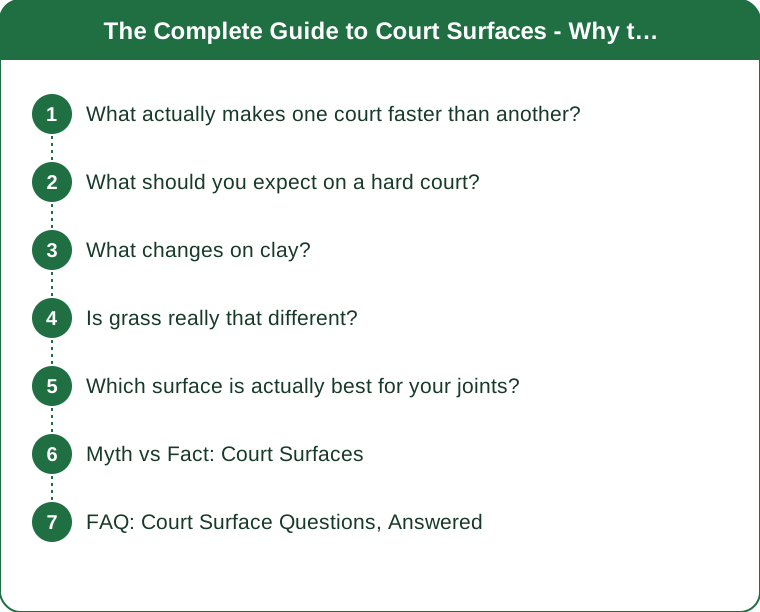
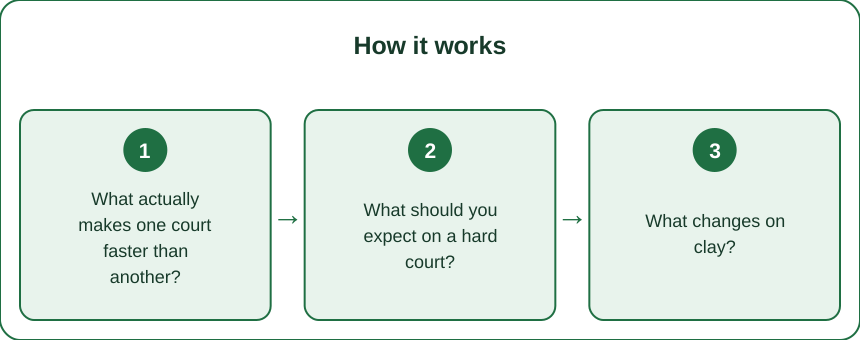
What actually makes one court faster than another?
Two separate properties, and people constantly collapse them into one word.
Speed after the bounce is governed by friction between ball and surface. A low-friction surface - smooth grass, a slick hard court with fine sand in the paint - lets the ball keep more of its horizontal velocity through the bounce, so it arrives sooner. A high-friction surface like loose clay grabs the ball, converting forward speed into spin and vertical bounce, so the ball sits up and arrives later.
Bounce height is governed by how much energy the surface returns. Hard courts are rigid and return most of it. Clay is a loose granular layer over a compacted base, and the interaction with friction sends the ball upward rather than forward. Grass is soft and irregular and absorbs a good deal, keeping the ball low.
Put together, that gives four practical categories:
- Fast and low - grass, some indoor carpets. Ball skids, stays under hip height, points end quickly.
- Fast and medium-high - most hard courts. The default surface for the majority of recreational players.
- Slow and high - clay. Long rallies, high contact points, heavy topspin rewarded.
- Slow and medium - cushioned acrylic and some artificial grass with sand infill. A middle option that many public courts use.
The surface also changes what your feet can do, and that is arguably the bigger deal for a recreational player. On hard court your shoe grips and stops. On clay it slides in a controlled way. That single difference reshapes how you move to every ball, and it is the part that takes weeks rather than minutes to adjust to.
What should you expect on a hard court?
Hard courts are the default in North America, and most club and public courts are some version of acrylic over asphalt or concrete.
The bounce is consistent and predictable. This is the surface’s greatest virtue for learning. The ball does what you expect nearly every time, which lets you build reliable timing. If you are developing technique, consistency of bounce is worth more than any other property.
Pace is medium to fast, depending on the texture of the paint. Courts are built with different amounts of silica sand in the top coat. More sand means more friction, a slower and higher bounce. A resurfaced court plays noticeably slower than the same court four years later once the texture has worn smooth, which is why a court you know well can change character over a few seasons.
The footing is grip-and-stop. Your shoe stops when you plant it, and everything above the ankle keeps travelling. That deceleration is where hard-court injury risk comes from - the load goes through ankle, knee, hip, and lower back rather than being dissipated in a slide.
Practical adjustments:
- Wear shoes with a proper hard-court outsole and adequate midsole cushioning. Running shoes lack lateral support and are the single most common footwear error at recreational level.
- Expect more soreness in the days after a hard-court session than after clay, particularly in quads and calves.
- Take the ball early where you can. The predictable bounce makes early contact safer here than anywhere else.
And in heat, hard courts get considerably hotter than the air temperature - dark acrylic in direct sun can reach well above what the forecast suggests, which is why late-summer sessions are harder work than the same session in May.
What changes on clay?
Clay is the surface most recreational players in North America have least access to and would probably benefit from most.
The ball sits up. High friction converts pace into bounce, so contact points are higher and you have more time. Flat hitters find their best shots come back. Topspin becomes far more effective because the surface amplifies it.
Points get longer. Winners are harder to hit because the surface gives your opponent time. Patience, depth, and shot tolerance beat power. A player who wins on hard court with a big first serve often finds that advantage substantially reduced.
You slide, and sliding is a skill. The proper clay movement pattern is to slide into the shot rather than stopping short of it, letting the slide absorb deceleration. Learned properly it is gentler on joints than any other surface. Learned badly - stopping and then slipping - it is how people fall.
Joint load is the lowest of the common surfaces. The sliding action spreads deceleration over a longer distance and time, which lowers peak force through the knee. For players managing knee or hip issues, this matters more than any equipment choice.
Practical adjustments:
- Clay-specific outsoles with a full herringbone pattern let you slide predictably. Hard-court shoes clog and grip unpredictably.
- Balls get heavier as they pick up clay, so expect to swing slightly more.
- Bad bounces happen where the surface is uneven or worn near the baseline. Read the court before the match.
- Expect to be tired in a different way - less impact soreness, more sustained leg fatigue from long points.
Is grass really that different?
Yes, and most recreational players never touch it, which makes the few times they do genuinely disorienting.
The bounce is low and it skids. The ball keeps horizontal speed through the bounce and stays under hip height, sometimes considerably lower. Anyone used to a chest-high hard-court bounce will hit the top half of the ball into the net repeatedly for the first hour.
Points are short. Serve and first-strike tennis dominate because there is less time to construct. Slice becomes far more useful - a slice backhand that skids low on grass is close to unplayable at recreational level.
Footing is unpredictable and slippery, particularly early in the day with dew or after any rain, and particularly on worn areas near the baseline and service boxes. Grass is the surface where recreational players most often slip.
The court changes during the match. A grass court on day one is a different surface from the same court after several matches - the baseline wears, bounces get lower and more irregular, and the character of play shifts.
Practical adjustments:
- Bend more. Almost every grass-court adjustment is a version of getting lower.
- Shorten the backswing. There is less time and the low bounce punishes long preparation.
- Use slice more than you normally would.
- Wear proper grass shoes with pimpled outsoles if you have access. Hard-court outsoles slip.
Realistically, most players will encounter grass a handful of times. The main value in understanding it is recognising that the ball behaving strangely is the surface, not a sudden loss of ability.
Which surface is actually best for your joints?
This is the question that matters most to the largest number of recreational players, and the answer is fairly clear.
Ranked from gentlest to hardest on joints:
- Clay - sliding dissipates deceleration force, and the slower pace means fewer violent direction changes. Consistently the recommendation for players managing knee, hip, or back issues.
- Cushioned acrylic - a hard court built with an extra rubberised layer beneath the paint. Plays similarly to a standard hard court with measurably reduced impact. Worth asking whether a facility has one.
- Artificial grass with sand infill - common at public facilities in some regions, allows a limited slide, moderate impact.
- Standard hard court - grip-and-stop, highest repeated impact load.
- Grass - low impact in principle, but slip risk makes it a mixed case, and irregular footing creates its own hazards.
A caveat worth stating plainly: surface is one variable among several. Shoe condition, total playing volume, warm-up quality, and whether you do any strength work for hips and calves all matter substantially. A player on clay who plays six hours a week with dead shoes and no warm-up is not protected by the surface. This is general information, not medical advice - if you have persistent joint pain, get it assessed rather than surface-shopping around it.
And a practical note about mixed play: the players who get hurt most often are frequently the ones who switch surfaces abruptly - a season on clay then straight into competitive hard-court matches. Give yourself a couple of lighter sessions to adapt rather than going straight into a match.
Myth vs Fact: Court Surfaces
Myth: Clay is slow because the surface is soft. Fact: It is slow because of friction, not softness. The high-friction granular layer converts forward speed into spin and vertical bounce. Softness affects how much energy is absorbed, but friction is what determines pace after the bounce.
Myth: Hard courts are all the same speed. Fact: They vary substantially depending on the amount of sand in the top coat and how worn it is. Two hard courts at the same facility can play noticeably differently, and the same court plays faster as it ages between resurfacings.
Myth: Grass is a soft, forgiving surface. Fact: Grass over compacted soil is firmer underfoot than most people expect, and the real hazard is slipping rather than impact. It is not automatically the joint-friendly option.
Myth: You should use the same shoes everywhere. Fact: Outsole patterns are surface-specific for a reason. A clay outsole on hard court wears out in weeks; a hard-court outsole on clay clogs and grips unpredictably, which is exactly when ankles roll.
Myth: Surface only matters at professional level. Fact: It arguably matters more at recreational level. Professionals adapt within a session; club players spend weeks adjusting their timing, and the frustration of playing badly on an unfamiliar surface is one of the more common reasons people think their game has collapsed when nothing has changed but the ground.
FAQ: Court Surface Questions, Answered
What is the easiest court surface for beginners?
A standard or cushioned hard court, because the bounce is the most predictable. Consistency of bounce lets you build reliable timing faster than any other property, and unpredictable bounces are demoralising when technique is still forming.
Which court surface is best for bad knees?
Clay, followed by cushioned acrylic. The sliding action on clay spreads deceleration over more time, which reduces peak load through the knee. Slower pace also means fewer sharp direction changes per point.
Why does the ball bounce differently at different clubs?
Hard courts vary in the texture of their top coat, which changes friction and therefore pace and bounce height. Newly resurfaced courts play slower and higher; worn courts play faster and lower. Altitude, humidity, and ball age also contribute.
Do I really need different shoes for clay?
If you play on clay regularly, yes. A full herringbone outsole lets you slide predictably and releases clay rather than packing it in. On occasional visits, a hard-court shoe is workable but expect less controlled footing, and be more conservative about sliding.
TL;DR:
- Surface controls bounce height, pace after the bounce, and what your feet can do - all three change how the game feels.
- Hard courts: predictable bounce, fast to medium, highest joint load, the default for most players.
- Clay: slow, high bounce, sliding movement, gentlest on knees, rewards patience and topspin.
- Grass: fast and low, short points, slice is king, slip risk is the real hazard.
- If you have joint issues, seek out clay or a cushioned acrylic before changing anything else.
The game did not desert you at that away match. You just changed the floor, and the floor is doing about a third of the work.
See It in Motion
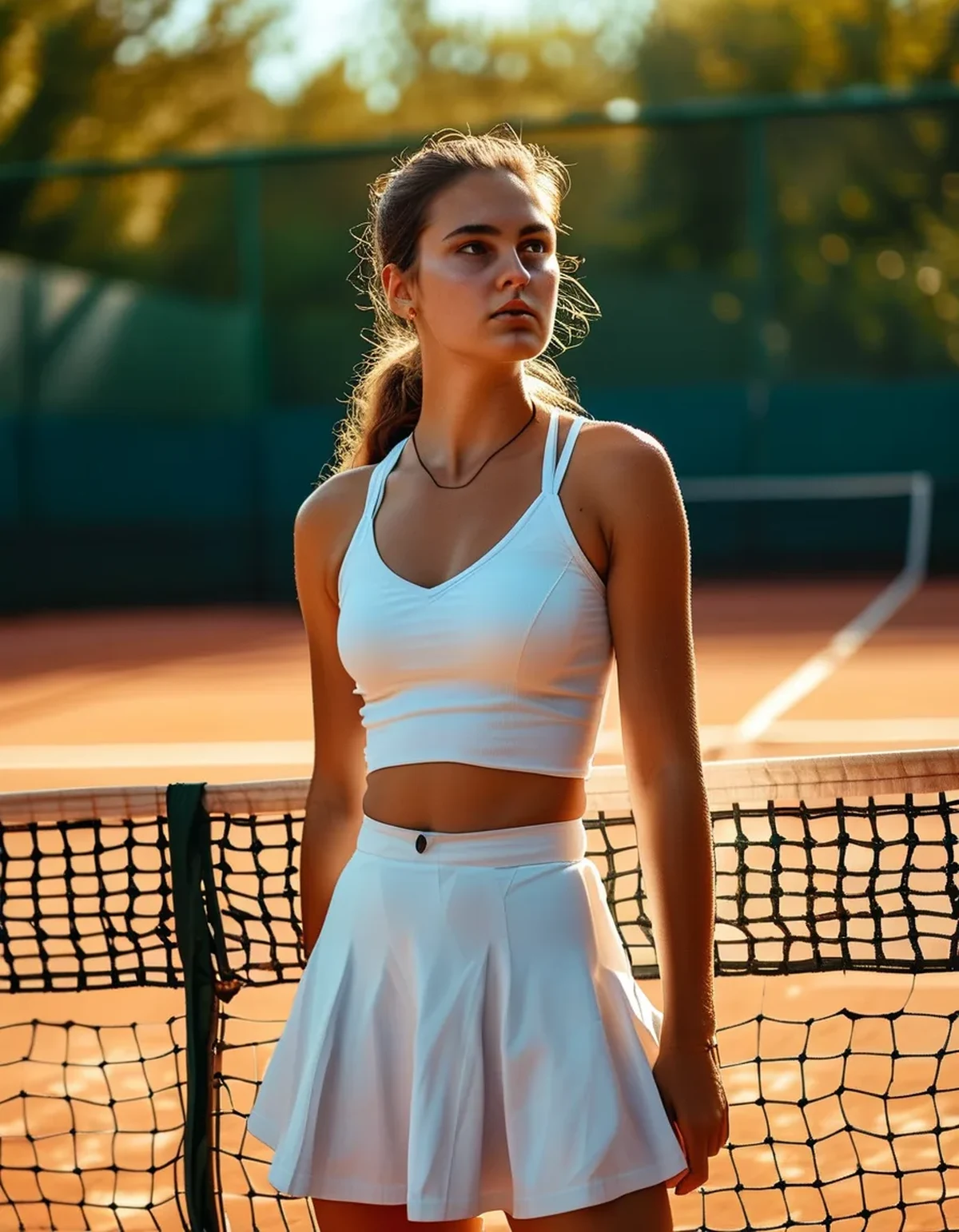
Seen here: UPF 50+ Pleated Running Skort with 26” Leggings & Pockets — shop similar styles on bubblelime.com
Keep Reading
This article is for general informational purposes only and is not medical advice. It is not a substitute for professional diagnosis or treatment. Always consult a qualified healthcare provider about your individual situation, especially before making significant changes to your diet or exercise routine.