Tennis Elbow Without the Tennis Drama: Prevention for Court Regulars
Quick Answer: Tennis elbow is an overuse injury of the tendons on the outside of the elbow, and it’s caused by volume spikes and gripping — not by tennis specifically. Prevent it with five minutes of slow eccentric wrist curls twice a week, a grip size checked by a shop or coach, and a rule of never increasing your weekly court time by more than about 10%. Catch it at the whisper stage and you keep your season.
Tennis elbow is the sport’s most famous souvenir, and it doesn’t ambush the club champion. It ambushes the enthusiastic returner — the person who found their old racquet in March and is now playing four times a week in July.
Which is to say: probably you.
The good news is that it whispers for weeks before it shouts, and the prevention plan takes five minutes.

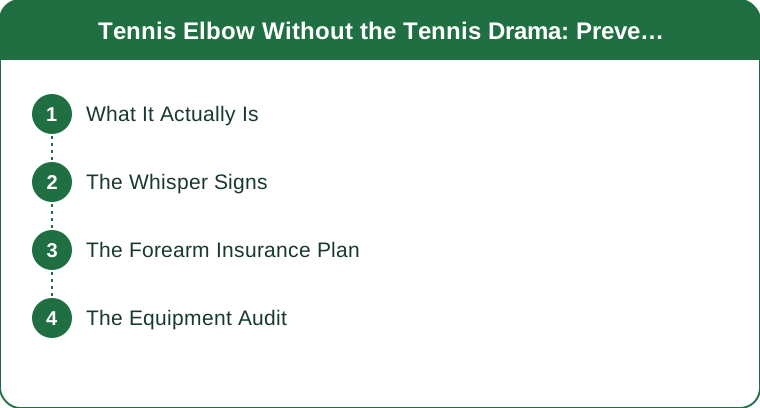
What Is Tennis Elbow, Actually?
The medical name is lateral epicondylitis, and the name is slightly wrong twice.
It’s the tendons attaching your wrist extensors to the bony bump on the outside of your elbow, irritated by repetitive gripping and by the shock of off-center hits. And it isn’t inflammation in the classic sense — it’s a degenerative change in the tendon from repeated load without enough recovery, which is why anti-inflammatories often disappoint people who expect them to fix it.
It’s also barely a tennis injury. Roughly half the people who get it have never held a racquet — plumbers, painters, and desk workers who grip a mouse eight hours a day all show up in the same clinic.
The real cause is almost always the same: too much, too soon.
What Are the Early Warning Signs?
The whisper stage has three tells, and they’re easy to explain away.
- A dull ache on the outer elbow that shows up an hour or two after playing, not during.
- Tenderness when you shake someone’s hand, turn a doorknob, or lift a full kettle.
- Forearm stiffness in the morning that loosens after a few minutes.
That’s the window. Respond here — cut volume, start the exercises — and you’re looking at a couple of quiet weeks. Play through it and you reach the shout stage, where gripping a racquet hurts during the point and the recovery timeline stretches to three to six months.
Nobody has ever regretted taking a week off in June. Plenty of people regret August.

The Five-Minute Forearm Insurance Plan
Twice a week, on non-playing days. A 1–2 kg dumbbell or a filled water bottle is plenty — this is a tendon-conditioning job, not a strength contest.
Eccentric wrist extensions — 3 sets of 15. Forearm resting on your thigh, palm down, weight in hand. Use your other hand to lift the weight up, then lower it slowly — count three to four seconds down. The slow lowering is the whole exercise; the lifting is just the reset.
Wrist flexions — 3 sets of 15. Same setup, palm up. Balances the forearm so the extensors aren’t doing everything.
Towel wrings — 3 sets of 10 each direction. Wring a damp towel like you’re squeezing it dry. Cheap, awkward, effective.
Grip squeezes — 3 sets of 20 with a soft ball, held 2 seconds each.
Total: about five minutes. Tendons adapt on a slower clock than enthusiasm does, and this is what closes the gap.
5 Mistakes Everyone Makes With Tennis Elbow
- Spiking volume after a break. Going from zero to four sessions a week is the number-one cause. Add roughly 10% per week and the injury mostly stops happening.
- Playing with a grip that’s too small. A grip under-sized by even half a size forces the forearm to squeeze harder on every ball, all match long. A shop measures it in about thirty seconds, free.
- Stringing too tight. Higher tension transmits more shock to the arm. Dropping 2–4 lb costs you almost nothing in control and is noticeably kinder to the elbow.
- Buying the strap before fixing the cause. A counterforce brace can reduce symptoms, but worn over an unchanged technique and an unchanged schedule it just delays the conversation.
- Resting completely until it stops hurting. Full rest lets tendons de-condition, and the pain returns on the first match back. Loaded, gradual, pain-tolerable exercise is what actually remodels the tissue.
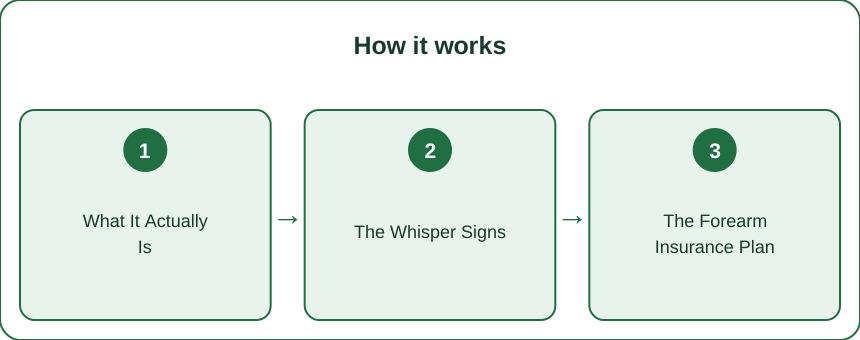
The Equipment and Technique Audit
Three checks, ranked by how much they matter.
Grip size is first and most fixable. String tension at the lower end of your racquet’s recommended range is second — and if you’re using a stiff polyester string as a recreational player, a softer multifilament is easier on the arm than any brace.
Technique is third but has the highest ceiling. Off-center hits and a late, wristy one-handed backhand are the classic generators. One coaching session costs less than a single course of physiotherapy, and the backhand fix usually lands within twenty minutes.
Frequently Asked Questions
How long does tennis elbow take to heal?
Caught early with load management and eccentric exercise, symptoms often settle in 4–8 weeks. Left to the shout stage it commonly runs 3–6 months, and a stubborn minority run longer. The single biggest variable is how quickly you cut the aggravating volume.
Should I wear a tennis elbow strap?
A counterforce brace worn a couple of inches below the elbow can reduce pain during play, and it’s a reasonable short-term aid. Treat it as a crutch that buys you time to fix grip size, tension, technique, and forearm conditioning — not as the fix itself.
Can I keep playing with tennis elbow?
Sometimes, at reduced volume, if pain stays mild and settles within 24 hours. If it hurts during the point, wakes you at night, or you’re losing grip strength, stop and get it looked at. See a physiotherapist or sports physician if pain persists beyond a few weeks, if there’s numbness or tingling, or if the elbow gives way — those point to something other than a straightforward overuse tendon.
TL;DR:
- Tennis elbow is a too-much-too-soon tendon injury, not a tennis-specific one.
- Whisper signs: outer-elbow ache after play, sore handshakes, morning forearm stiffness.
- Five minutes twice weekly: slow eccentric wrist extensions, flexions, towel wrings, grip squeezes.
- Check grip size, drop string tension 2–4 lb, and fix the backhand with one lesson.
- Increase weekly play by about 10%, not by doubling.
- Loaded gradual exercise beats total rest — de-conditioned tendons just re-injure.
See It in Motion
Seen here: UPF 50+ Adjustable A-Line Running Skort with Pockets — shop it on bubblelime.com
Keep Reading
This article is for general informational purposes only and is not medical advice. It is not a substitute for professional diagnosis or treatment. Always consult a qualified healthcare provider about your individual situation, especially before making significant changes to your diet or exercise routine.