Simple Tennis Footwork Drills to Move Better on Court
Quick Answer: Master the split step first, add agility ladder drills for foot speed, drill recovery steps back to center after every shot, and practice lateral shuffles. Fold all four into your warm-up and court coverage transforms within weeks.
Ask any tennis coach where great tennis really begins and they’ll point at your feet. All the racquet skill in the world doesn’t help if you can’t get into position — better footwork means you reach more balls, hit from stronger positions, and tire less. The encouraging part is that footwork is genuinely trainable. Here are simple drills to move better on court, whatever your level.

What’s the single most important footwork habit in tennis?
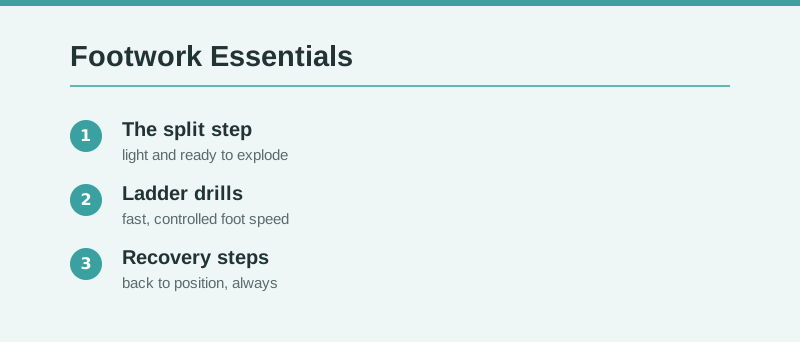
The split step — a small hop timed to land just as your opponent strikes the ball. This little bounce keeps you light on your toes and ready to explode in any direction. It’s the single most important footwork habit in tennis, and most recreational players skip it entirely. Practice timing your split step to your opponent’s contact and your court coverage transforms almost immediately.
How do you actually train faster feet for tennis?
An agility ladder is a footwork goldmine. Quick in-and-out steps, lateral shuffles, and crossover patterns through the ladder build the fast, controlled foot speed tennis constantly demands. Just a few minutes of ladder work before you play sharpens your movement noticeably, training your feet to move quickly and precisely under pressure. No ladder? Chalk or a row of markers works just as well.

Why do good players never seem rushed on court?
Because of what they do right after each shot. Practice quick recovery steps back toward the center of the court after every stroke, so you’re never caught out of position for the next ball. Good recovery footwork is what separates players who always seem to have time from those who are perpetually scrambling. Drill it deliberately until returning to position becomes completely automatic.
Why does lateral movement deserve its own dedicated practice?
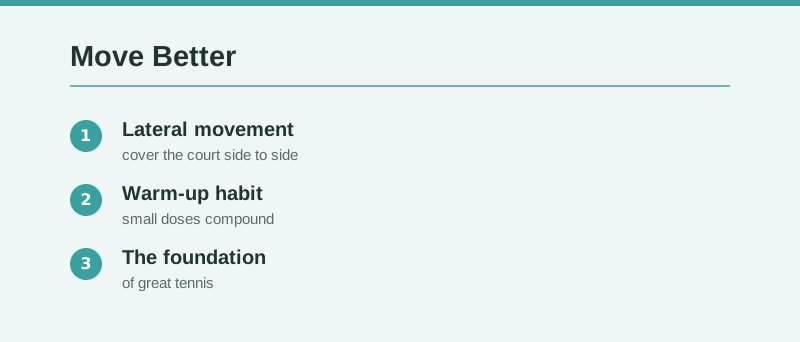
Because tennis is played largely side to side. Side shuffles, defensive slides, and quick direction changes train your body to cover the court efficiently without crossing your feet awkwardly. Strong lateral movement means you reach wide balls comfortably and recover quickly, which pays off in every single rally. Include some dedicated lateral drills and you’ll feel the difference on court fast.
What’s the easiest way to actually stick with footwork training?
Fold it into your warm-up. A few minutes of split steps, ladder work, and lateral shuffles before you hit not only sharpens your feet but genuinely reduces injury risk by preparing your body to move. Consistent, small doses of footwork practice compound over time into noticeably better, more efficient movement across the whole court.
5 Mistakes Everyone Makes With Tennis Footwork
- Skipping the split step entirely. It’s the single highest-leverage footwork habit and the easiest to forget under pressure.
- Only practicing footwork drills, never applying them in play. Drill the pattern, then consciously use it during points.
- Neglecting recovery steps. Reaching the ball is only half the job — getting back to center matters just as much.
- Crossing feet during lateral movement. Side shuffles keep you balanced; crossed feet slow your next reaction.
- Doing footwork drills cold, without a warm-up. Quick, explosive footwork drills deserve a properly warmed-up body first.
FAQ
How often should you practice footwork drills to see improvement?
Even 5-10 minutes before every session, done consistently over a few weeks, produces noticeably better court coverage — footwork responds well to frequent, short practice.
Do footwork drills help prevent tennis injuries?
Yes — footwork that includes a proper warm-up and good recovery mechanics reduces the awkward, off-balance movements that commonly lead to ankle and knee injuries on court.
Can beginners benefit from footwork drills, or are they only for advanced players?
Beginners often benefit the most — footwork habits are easier to build correctly from the start than to retrain later, and the split step alone noticeably improves a beginner’s court coverage.
How long should a footwork warm-up take before a match?
Five to ten minutes is enough — a few split-step reps, a quick pass through ladder patterns, and some lateral shuffles cover the essentials without tiring you out before you’ve even started playing.
TL;DR:
- Master the split step — the single most important footwork habit
- Use ladder drills to build fast, controlled foot speed
- Drill recovery steps back to center after every shot
- Practice lateral shuffles without crossing your feet
- Fold all of it into your warm-up for consistent improvement
Simple tennis footwork drills — the split step, ladder work, recovery steps, and lateral movement — help you move better, reach more balls, and play from stronger positions. Fold them into your warm-up and practice consistently, and your court coverage will transform. Great footwork is the quiet foundation of great tennis, and it’s completely within your reach.
See It in Motion
Seen here: UPF 50+ Adjustable A-Line Running Skort with Pockets — shop it on bubblelime.com
Keep Reading
This article is for general informational purposes only and is not medical advice. It is not a substitute for professional diagnosis or treatment. Always consult a qualified healthcare provider about your individual situation, especially before making significant changes to your diet or exercise routine.