The Complete Guide to Recovering From a Tennis or Pickleball Wrist Injury
Quick Answer: Wrist injury recovery from tennis and pickleball generally follows a phased approach — rest and inflammation control first, then progressive grip and wrist mobility work, then a gradual return to racquet activity — but the underlying mechanical cause often differs between the two sports (tennis’s longer swing versus pickleball’s shorter, more repetitive wrist-snap motion), which affects both the specific injury pattern and the most relevant prevention adjustments once you return.
This guide covers how tennis and pickleball wrist injuries differ mechanically, the general recovery phases, what prevention actually looks like once you’re back playing, and when it’s time to see a professional rather than self-managing.

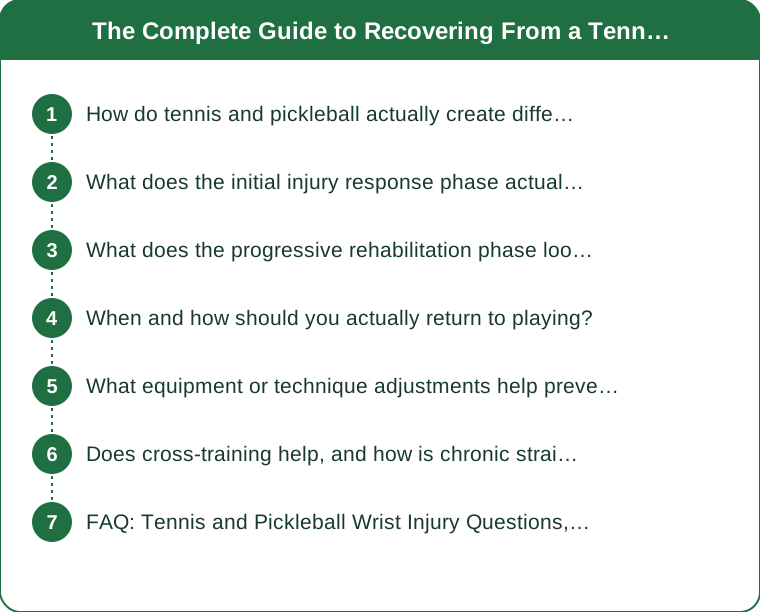
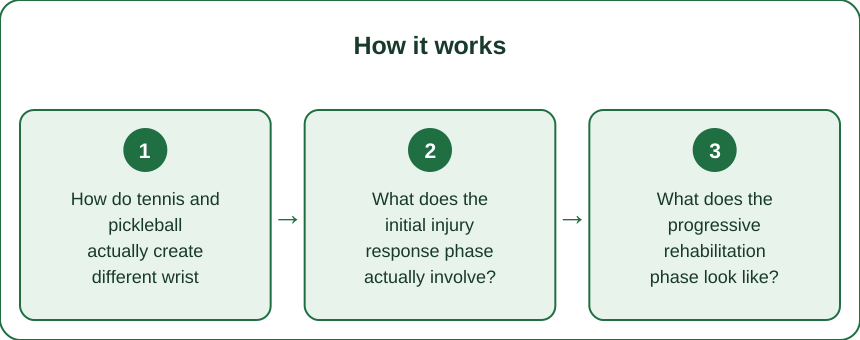
How do tennis and pickleball actually create different wrist strain patterns?
Tennis strokes, particularly the two-handed backhand and serve, load the wrist through a longer range of motion with more shoulder and arm involvement sharing the force, while pickleball’s shorter paddle and more compact swing mechanics place proportionally more strain directly on wrist flexion and extension, especially during quick reactive volleys near the net.
This is part of why pickleball players, including many who transitioned from tennis, sometimes experience new or different wrist strain patterns than they were used to, since the mechanical demand on the wrist specifically is genuinely different despite both being racquet sports.
What does the initial injury response phase actually involve?
The first few days typically focus on reducing acute inflammation — rest from racquet activity, ice application in the initial 48-72 hours, and avoiding movements that reproduce sharp pain, while gentle, pain-free range of motion (not stretching into pain) is generally fine and even encouraged to prevent excessive stiffness.
Over-resting into complete immobilization for a prolonged period can sometimes create its own stiffness problems, so the goal in this phase is inflammation control paired with gentle movement, not total immobilization unless a professional has specifically advised that.
What does the progressive rehabilitation phase look like?
Once acute pain has settled, rehabilitation typically progresses through gentle wrist flexor and extensor strengthening (often starting with just gripping and releasing a soft ball), gradually adding light resistance band work, and eventually grip-strengthening exercises that mirror the actual demands of holding and controlling a racquet or paddle.
This phase is where working with a physical therapist adds real value, since progressing too quickly through resistance levels is a common way to re-aggravate a healing wrist injury before it’s actually ready for that load.

When and how should you actually return to playing?
A gradual return — starting with light rallying rather than full-intensity match play, and paying attention to how the wrist feels both during and the day after playing — works better than an all-or-nothing return once pain has subsided, since full match intensity re-introduces the exact repetitive strain pattern that caused the injury in the first place.
Many rehabilitation programs suggest a multi-week graduated return (light hitting, then moderate volume, then full intensity) rather than jumping straight back into competitive play the moment pain resolves.
What equipment or technique adjustments help prevent re-injury?
For tennis, checking grip size and string tension (an overly tight string bed or ill-fitting grip both increase wrist strain) is a practical adjustment worth reviewing with a pro shop; for pickleball, paddle weight matters significantly, since a heavier paddle increases wrist strain on the sport’s characteristically quick, repetitive shots.
Technique review with a coach — particularly around wrist “snap” habits in pickleball dinks and volleys, or grip tension during tennis strokes — often reveals a modifiable habit contributing to strain that equipment changes alone won’t fully address.
Does cross-training help, and how is chronic strain different from an acute injury?
Building broader forearm and grip strength through general strength training (not just racquet-specific movements) provides more baseline tissue resilience against the repetitive strain both sports place on the wrist, which is a genuinely useful addition beyond just sport-specific rehabilitation exercises.
What Nobody Tells You About Chronic vs. Acute Wrist Strain
A sudden, sharp wrist injury (an acute strain from a single bad hit) generally has a clearer, more predictable recovery timeline than a gradually-developed, repetitive-strain wrist issue that built up over weeks or months of play — the chronic version often requires more attention to underlying technique and equipment factors, not just a rest-and-strengthen recovery process, since the original cause is ongoing rather than a single incident.
FAQ: Tennis and Pickleball Wrist Injury Questions, Answered
How long does a typical wrist strain from racquet sports take to heal?
Mild strains often improve within 2-4 weeks with appropriate rest and rehabilitation, while more significant injuries can take considerably longer — timeline varies enough by severity that a professional assessment is more useful than a generic estimate.
Should I switch from tennis to pickleball (or vice versa) if I keep straining my wrist?
Not necessarily — since both sports strain the wrist differently, switching doesn’t guarantee avoiding the issue; addressing the specific technique, equipment, and strength factors behind the strain is generally more effective than switching sports.
When should I see a doctor instead of trying to rehab a wrist injury myself?
If pain is severe, doesn’t improve within a couple weeks of appropriate rest, involves visible swelling or deformity, or significantly limits daily (non-sport) wrist use, seeing a doctor or physical therapist rather than continuing to self-manage is the appropriate next step. This is general information, not medical advice.
TL;DR:
- Tennis and pickleball strain the wrist through genuinely different mechanical patterns
- Initial recovery balances inflammation control with gentle, pain-free movement, not full immobilization
- Progressive strengthening should build gradually — rushing resistance work risks re-aggravation
- Equipment adjustments (grip size, paddle weight, string tension) meaningfully reduce re-injury risk
Wrist injury recovery from racquet sports rewards patience through a full graduated process — rushing back to full intensity is the most common way the same injury recurs. This is general information, not medical advice.
See It in Motion
Seen here: UPF 50+ Adjustable A-Line Running Skort with Pockets — shop it on bubblelime.com
Keep Reading
This article is for general informational purposes only and is not medical advice. It is not a substitute for professional diagnosis or treatment. Always consult a qualified healthcare provider about your individual situation, especially before making significant changes to your diet or exercise routine.