The Complete Guide to Returning Serve — the Shot Nobody Practices and Everybody Loses To
Quick Answer: The return of serve is the second most important shot in tennis and the least practiced. Most amateurs lose returns not because of hand speed but because of three fixable habits: standing too deep on second serves, split-stepping late, and trying to hit winners off first serves. Fix the timing of your split step first — it is worth more than any grip change.
Count how many points you played last match. Now count how many of them started with you returning. Roughly half. Now count how many minutes you have ever spent practicing returns. For most players the honest answer is close to zero, because returns require a partner willing to serve for twenty minutes and get nothing out of it.
That gap is why the return is the biggest cheap upgrade in recreational tennis.
Why is the return of serve so much harder than a normal groundstroke?
Because you do not get to choose the ball. Every other shot in tennis gives you some influence over what arrives — you hit deep, they answer from deep, and the rally settles into a rhythm your body already knows. The return is the one ball a match where your opponent picks the speed, the spin, the direction and the timing, and you have roughly half a second to solve all four.
The numbers matter here. A 90 mph serve from the baseline reaches the returner in about 0.6 seconds. Human visual reaction time to a moving object sits around 0.2 seconds, and a full swing takes 0.3 to 0.4 seconds to execute. Do the arithmetic and there is no time left over for a decision. Anything you consciously decide during the flight of the ball is already too late.
That is the whole problem in one sentence. The return has to be pre-decided. Elite returners are not reacting faster than you — they are reacting to fewer things, because they have already narrowed the possibilities before the ball is struck. They know the server’s favourite second-serve pattern. They have chosen a stance. They have picked which side they will cover.
The practical consequence for a recreational player is counterintuitive. You improve the return not by getting quicker but by removing decisions. Decide before the point whether you are blocking or driving. Decide which wing you are protecting. Being slightly wrong with a committed plan beats being theoretically correct with no plan, every time.
What is the correct split step timing on a return?
The split step is a small hop that lands you on the balls of your feet with knees soft, and its entire purpose is to load your legs so you can push off in any direction. Almost every recreational returner does one. Almost every recreational returner does it late.
The rule is simple and worth memorising: you land as the server’s racquet contacts the ball — not after. Not when you see where the ball is going. Not when it crosses the net. Land at contact. That means you have to start the hop before contact, roughly when the server’s racquet drops behind their back into the trophy position.
If you land after contact, you are stationary at the exact moment you need to be moving, and you spend the first fifth of a second unloading instead of accelerating. That is the difference between a comfortable return and a stretched one, and it is why returns that feel impossibly fast often are not fast at all — you simply started late.
Here is a self-test that takes one service game. Have someone film you from behind at ground level. Watch for the frame where the server’s strings meet the ball, then look at your feet. If your feet are in the air, you are early — adjust by a beat. If your feet are flat on the ground and still, you are late, which is the far more common error. If you are landing softly with knees bent, that is it.
One more detail people skip: the split step should be small. A big jump feels athletic and costs you time in the air. Two inches is plenty.
Where should you actually stand to return serve?
Court position is the most adjustable variable you own, and most players never touch it. They pick one spot in their first season and stand there for a decade.
Start with the baseline distinction. Against a first serve, standing deeper buys you time — the ball has more distance to travel and more time to slow down. Against a second serve, standing deeper is usually a mistake, because you give up the single biggest advantage in the sport: taking a weak ball early and inside the court.
A workable default for a club player: on first serves, start one to three feet behind the baseline. On second serves, step in so your feet are on or just inside the baseline. That one adjustment — moving forward two or three feet on second serves — changes the geometry of the point more than any technique change you could make in a season. You cut the angle available to the server, you take time away from them, and you hit a rising ball that carries their own pace back at them.
Sideways position matters too. Standard advice is to straddle the singles sideline extended, but the better approach is to shade towards the server’s favourite target. Most club servers hit their reliable serve to one place under pressure, usually the body or the T on the deuce side. Watch two service games, find the pattern, then stand a foot in that direction. You will look like you are cheating. You are.
And change it during the match. If the server has found a rhythm, move. Even a bad position change disrupts a server who has been aiming at the same spot for twenty minutes.

How should you swing differently on a first serve versus a second serve?
These are two different shots that happen to share a name, and treating them the same is the most common strategic error in recreational tennis.
On a first serve return, your job is to get the ball back in play, deep, with a neutral outcome. That is it. The pace is already there — the server supplied it — so a compact block using their speed will send the ball back deeper than a full swing usually does. Shorten your backswing to roughly half of a normal groundstroke, keep the racquet head above the wrist, and think of it as a firm catch-and-redirect rather than a hit. Target the middle third of the court, deep. Winners off first serves are a fantasy that costs points.
On a second serve return, everything inverts. The ball arrives slower and higher, often with kick that bounces up into a comfortable strike zone. Now you supply the pace, you take a fuller swing, and you should be hitting with intent — cross-court to the server’s weaker wing, or deep down the middle to jam them as they move forward.
The measurable target here: aim to make the server hit their first shot after the serve from behind the baseline rather than inside it. That single metric predicts who wins the point better than winner counts do.
A useful drill: play a set where you are only allowed to block first serves and only allowed to drive second serves. It feels artificial for two games and then it feels obvious, and most players find their return games get shorter and more decisive.
5 Mistakes Everyone Makes on the Return
1. Watching the ball instead of the server. Your eyes should be on the server’s toss and shoulder turn, not hunting for the ball after it leaves the strings. The toss location leaks the serve direction more reliably than anything else — a toss further to the server’s right on a right-handed player usually means a slice out wide.
2. Taking a full backswing on a fast serve. If the racquet is still going back when the ball arrives, the contact point is behind you and the ball goes long or into the net. Halve it.
3. Standing in the same place for the entire match. Position is a tactic, not a habit. If you have not moved your return position in three service games, you are volunteering information.
4. Trying to win the point on the return. Attempting a return winner and missing costs you a full point. A neutral deep return costs you nothing and starts a rally you are equally likely to win. The maths only favours aggression on genuinely weak second serves.
5. Split-stepping on the bounce instead of at contact. This is the sneaky one, and it is the third mistake on this list that surprises even players who have taken lessons for years. Splitting when the ball bounces feels natural because that is the moment your brain registers the ball as real. It is roughly two tenths of a second too late, and two tenths of a second is the entire margin on a decent serve.
How do you practice returns without a serving partner?
This is the practical obstacle. Nobody wants to serve for twenty minutes so you can practice, and ball machines rarely replicate serve trajectory well. Three workarounds that actually function:
Shadow returns with a timing cue. Stand in return position, have someone clap at random intervals, and split-step to land on the clap. Ten minutes of this twice a week rebuilds split timing without a ball. It sounds too simple to work. It works because the failure being corrected is timing, not contact.
Serve-and-return swaps. Trade with a partner: five minutes of you returning their serves, five minutes of them returning yours, alternating. Both players get value, so nobody resents it. Do this as the last ten minutes of every hit and you will have practiced returns more than most opponents ever have.
Wall blocks. Stand close to a practice wall — closer than feels comfortable, maybe fifteen feet — and hit compact blocks off the rebound. The wall returns the ball faster than a rally partner and forces the shortened swing you need on first serves. This is the closest cheap substitute for real serve pace.
Return targets in match play. In social matches, set yourself a private rule: every second serve return must land past the service line. Nobody else needs to know. You will lose a couple of points to it in the first set and gain them back with interest.
A reasonable weekly dose is two sessions of ten to fifteen minutes. Returns respond quickly to practice because so few players have any baseline at all.
FAQ: Return of Serve Questions, Answered
Should I use a different grip for returning?
Most players do better with a slightly more neutral grip on the forehand side than they use in rallies, because it lets you handle both a jamming body serve and a wide one without a grip change you do not have time to make. On the backhand, keep your normal grip — the change costs more than it gains.
Is a one-handed or two-handed backhand better for returning?
Two hands is generally easier on returns because the extra hand stabilises the racquet face against pace, which is exactly what a fast serve attacks. One-handers can absolutely return well, but they benefit more from the compact-block approach and from standing slightly deeper on first serves.
What do I do against a serve I genuinely cannot reach?
Block it back with the racquet face open and accept a floating ball, or take a step further back and give yourself a chance. There is no shame in a deep return position against a serve that is beating you — the alternative is a series of free points. Change position first, technique second.
How do I stop panicking on big points?
Commit to a plan before the toss and say it in your head — deep down the middle, or cross-court to the backhand. The panic is a decision-making failure, not a nerve failure. A pre-committed target gives your body something to do while your brain catches up.
TL;DR:
- Land your split step at the server’s contact, not on the bounce — this is the single highest-value fix and it costs nothing.
- Block first serves with a half backswing and aim deep down the middle; drive second serves after stepping onto or inside the baseline.
- Move your return position during the match; standing in one spot for a whole match hands the server free information.
- Practice with shadow split steps, wall blocks and ten-minute serve-return swaps — you do not need a dedicated partner.
The return is the shot with the widest gap between how often it is played and how often it is practiced, which is exactly why a small amount of attention pays back so quickly. Spend two weeks on split-step timing and second-serve position before you change anything technical. Most players find their return games stop feeling like something that happens to them and start feeling like something they run.
See It in Motion
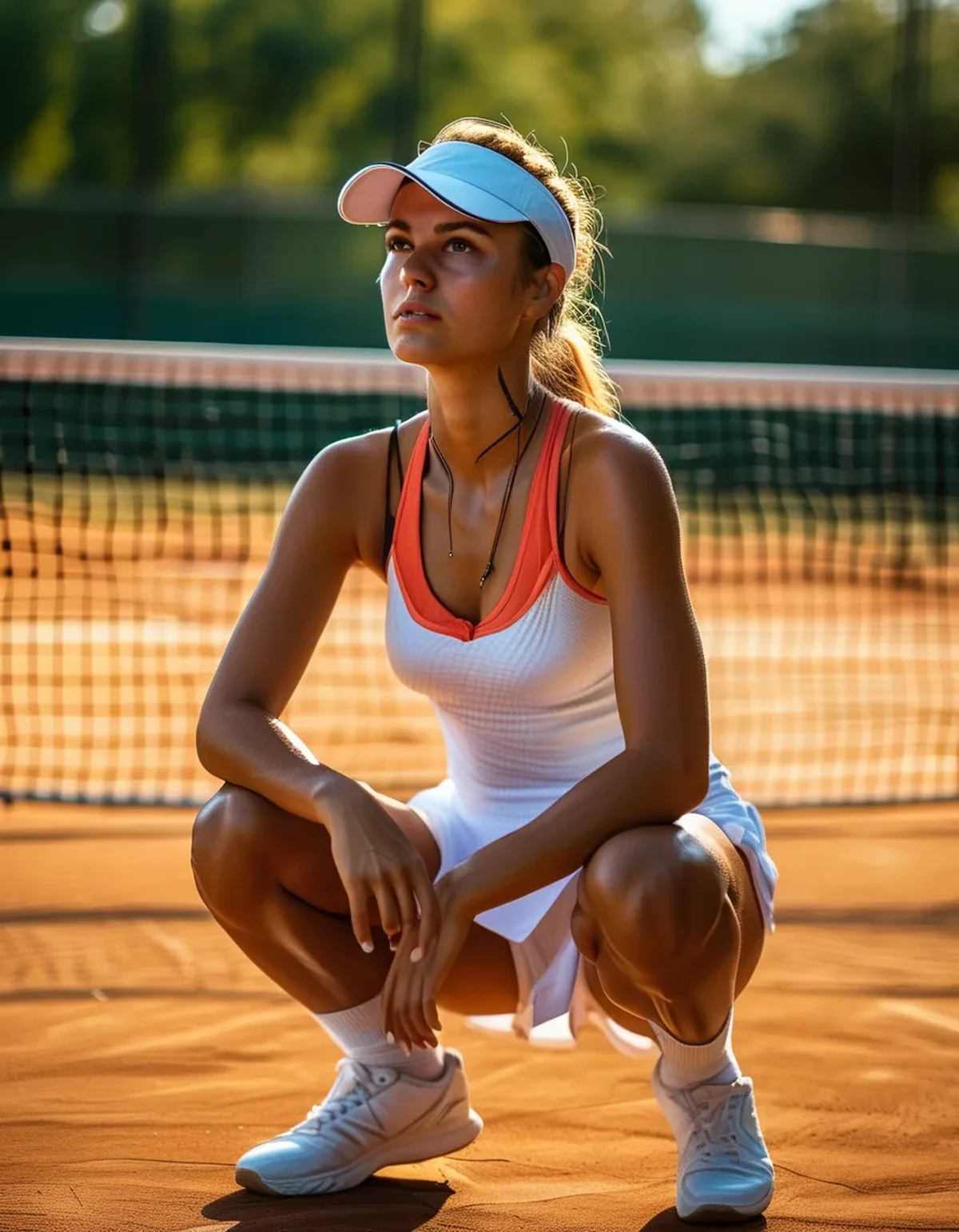
Seen here: UPF 50+ Pleated Running Skort with 26” Leggings & Pockets — shop similar styles on bubblelime.com
Keep Reading
This article is for general informational purposes only and is not medical advice. It is not a substitute for professional diagnosis or treatment. Always consult a qualified healthcare provider about your individual situation, especially before making significant changes to your diet or exercise routine.