The Serve, Demystified: An Adult Beginner's Honest Guide to Tennis's Hardest Skill
Quick Answer: The tennis serve is hard because it’s the only shot you generate entirely from scratch — no incoming ball to react to — and most of the trouble traces back to an inconsistent toss, not your swing. Fix the toss first with wall-only reps, then layer in the rhythm and contact point; most adult beginners see real improvement within a few months of consistent practice.
Everyone on the court is watching your toss wobble in the air, and for a second you already know this serve is going in the net. Take a breath — every single player who now serves confidently once stood exactly where you’re standing. The good news: the serve breaks down into pieces you can actually practice on purpose.

Why Is the Tennis Serve So Hard for Adult Beginners?
The serve is the sport’s only fully self-generated stroke. Every other shot in tennis responds to a ball already coming at you — the serve starts from a dead stop and asks you to coordinate a toss, a body rotation, and an overhead strike all at once. It’s basically a throw wearing a racquet.
That’s actually good news if you’ve ever thrown a ball. The serve borrows heavily from a throwing motion, so adults who grew up throwing (softball, football, even just tossing things to a dog) tend to pick it up faster. If you haven’t, you’re learning two skills at once — throwing mechanics and racquet technique — which is completely normal and not a sign you’re behind.
Give yourself a real timeline: months to get reliable, longer to get genuinely dangerous. The serve rewards patience more than almost any other shot in the sport, and every player you admire wobbled through this exact season once.
Why Is the Toss the Real Skill Behind a Good Serve?
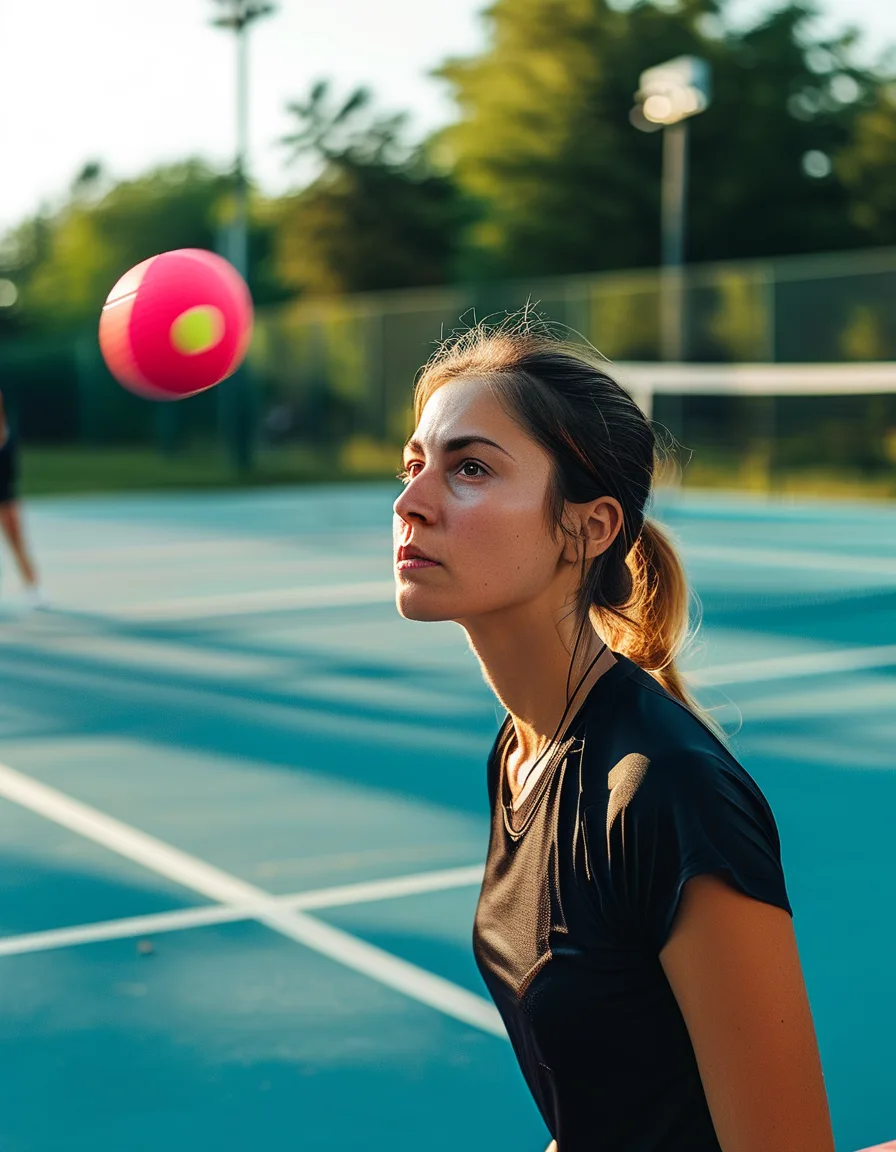
Here’s the thing most new players don’t realize: bad serves are almost always bad tosses in disguise. If the ball wanders even a few inches off its ideal spot, your whole swing turns into an improvisation — which is why fixing the toss first, before anything else, is the move every good coach makes.
A few toss fundamentals to lock in:
- Rest the ball on your fingers, not your palm — this keeps the release clean.
- Lift your arm straight up like you’re raising your hand in class, then let the ball go at eye height.
- Aim for the ball to peak just above your full reach, slightly in front of you — not overhead, not behind.
- If the toss is off, catch it and start over — in practice and in real matches. Serving off a bad toss just trains bad habits.
The best part? You can practice this without a court. Toss against a wall or a line at home for ten minutes at a time — it’s the least glamorous drill in tennis and also one of the highest-return ones.
What’s the Right Rhythm and Contact Point for a Beginner Serve?
Once the toss is steady, you can start assembling the rest of the motion. Adult beginners don’t need the full pro windup — an abbreviated start where your racket goes back at the same time as your toss simplifies the timing that trips up most new servers.
A simple cue to hold onto: “toss-and-reach.” The toss arm lifts, the racquet drops behind your back, your knees bend slightly, and then you reach up and over — almost like you’re throwing the racquet head at the ball.
Contact should happen as high as you can reach, slightly out in front of your body. At beginner speeds, you’re hitting the ball up and out, not smashing down on it — a downward swat at this stage just finds the net every time.
And here’s a stat worth knowing: the service box is enormous at rally pace. Aim for the middle of the box, celebrate anything that lands in, and save the corner-painting placement games for later.
What Should a Practice Plan for the Serve Look Like?
Progress on the serve comes almost entirely from volume, so build a simple, repeatable routine:
- The basket ritual — 20 serves after every lesson or hitting session. This is the single habit that separates players who keep improving from players who plateau.
- The progression ladder — start with toss-only reps, move to serving from the service line (half the distance builds contact confidence fast), then finally back up to the full baseline.
- One cue per session — work on the toss, or the reach, or the rhythm, but not all three at once. Trying to fix seven things in one serve is how the wobble happens in the first place.
- The double-fault reframe — in beginner matches, it’s completely fine to use a gentle, safe second serve without shame. Every player who now serves hard passed through this exact stage first.
The serve is tennis’s hardest skill, but it’s also one of the most learnable — because it breaks into clean, practicable pieces. Start with the toss, and the rest follows.
5 Mistakes Everyone Makes on the Serve
- Chasing power before consistency. A fast serve that lands out isn’t actually useful — dial in placement first, speed later.
- Serving off a bad toss instead of catching it. Every wobbly toss you swing at trains your body to accept a wobbly toss as normal.
- Swatting down at the ball. At beginner speed, a downward hit almost always finds the net.
- Trying to fix everything in one swing. One cue per session beats five cues that fight each other.
- Skipping toss-only practice because it feels boring. It’s unglamorous, but it’s the drill with the highest payoff per minute.
How long does it take to learn a reliable tennis serve?
Most adult beginners see a genuinely reliable serve within a few months of consistent practice, especially if toss work is part of every session. A “weaponized,” fast serve typically takes considerably longer to develop.
Why does my toss keep drifting to one side?
A drifting toss is usually a release problem — the ball is leaving your fingers instead of a relaxed palm-up hand, or your arm isn’t lifting in a straight line. Practicing tosses alone, without swinging at all, is the fastest fix.
Should I use a full windup as a beginner?
Not at first. An abbreviated motion, where your toss and racket-back happen together, removes a timing variable and makes it much easier to serve consistently while you’re still building the fundamentals.
TL;DR:
- The serve is uniquely hard because you generate it entirely on your own, with no incoming ball to react to.
- Fix the toss first — fingers not palm, straight-arm lift, release at eye height, catch it if it’s off.
- Use the “toss-and-reach” cue, and hit up and slightly forward, not down.
- Practice with 20 serves after every session, one cue at a time, using the progression ladder from toss-only to full baseline.
- It’s a throw in disguise, built piece by piece — wobble season included.
See It in Motion
Seen here: UPF 50+ Pleated Running Skort with 26” Leggings & Pockets — shop similar styles on bubblelime.com
Keep Reading
This article is for general informational purposes only and is not medical advice. It is not a substitute for professional diagnosis or treatment. Always consult a qualified healthcare provider about your individual situation, especially before making significant changes to your diet or exercise routine.