5 Drills to Add Power to Your Tennis Serve
Quick Answer: Serve power comes from a chain reaction — legs driving up, core rotating, arm and wrist finishing — not from swinging your arm harder. Five drills build it piece by piece: leg drive, the trophy pose pause, medicine-ball core rotation, a consistent toss, and the wrist “pronation” snap.
The serve is the one shot in tennis entirely within your control — and the one most players leave untapped. Real serve power doesn’t come from swinging your arm harder; it comes from your legs, core, and timing working together. These five drills build the kind of serve that starts points on your terms.

Why Doesn’t Arm Strength Alone Give Me a Powerful Serve?
A big serve is a chain reaction that begins with your legs pushing into the court and travels up through your core and arm before it ever reaches the racket. Grooving that sequence is where power actually lives. Skip the legs and you’re serving with a fraction of your real potential, no matter how hard your arm swings.
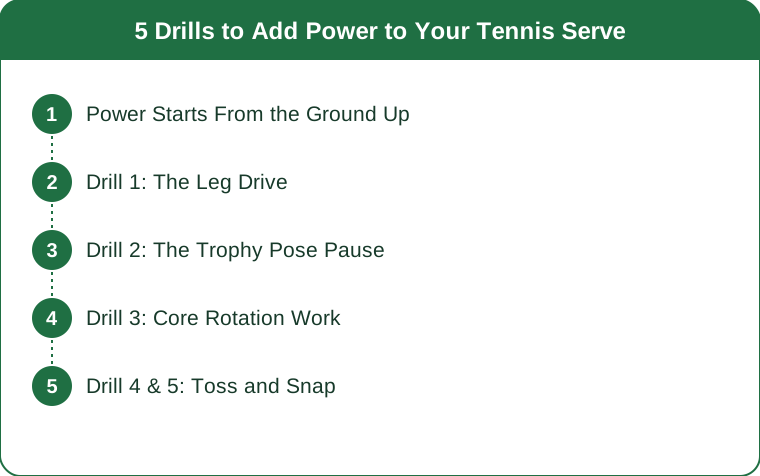
Drill 1: The Leg Drive
Practice bending your knees and driving up into the ball, feeling your legs launch you rather than just your arm swinging on its own. Exaggerate the push at first — more than feels natural — to build the habit before you dial it back to something game-usable. This single change adds surprising speed on its own.

Drill 2: The Trophy Pose Pause
Pause at the “trophy” position — racket back, tossing arm up — to ingrain proper form before the explosive part of the motion happens. A clean setup makes a powerful finish possible; a rushed one caps how much power you can generate no matter how hard you try. Slow it down to speed it up.
Drill 3: Core Rotation Work
Add medicine-ball rotational throws off the court to build the trunk rotation that whips the racket through the ball. A strong, fast core is a hidden serve weapon most players never train directly. This transfers straight to racket-head speed on court.
Drill 4 & 5: Toss and Snap
Perfect a consistent toss so you’re always hitting from the same spot — an inconsistent toss forces your body to compensate mid-motion, which bleeds power every time. Then practice the wrist “pronation” snap that finishes the serve, the small motion that converts built-up speed into actual racket-head speed at contact.
What Nobody Tells You About Building Serve Power
- The legs matter more than most players assume — a serve built purely from the shoulder up caps out far below what the same player could generate using leg drive
- Slowing down the setup speeds up the result — pausing at the trophy position feels counterintuitive, but a clean setup is what actually enables an explosive finish
- Toss consistency is a power issue, not just an accuracy issue — a bad toss forces last-second body compensation that quietly drains speed, even when the serve still goes in
- Off-court training transfers directly — medicine-ball rotational throws build the exact trunk rotation your serve relies on, without needing a single extra hour on court
Tennis Serve Power FAQ
Which drill should I start with if I only have time for one?
The leg drive — it’s the foundation the rest of the serve chain builds on, and most recreational players are serving almost entirely from the arm and shoulder without realizing it.
How long does it take to see results from these drills?
Most players notice a difference in serve speed within a few weeks of consistent practice, especially once the leg drive and trophy pose pause become automatic rather than something you’re actively thinking about mid-serve.
Do I need a medicine ball to build serve power, or can I skip that drill?
A medicine ball helps isolate the trunk rotation specifically, but you can approximate the same movement pattern with bodyweight rotational drills if you don’t have one. The goal is training the rotation itself, not the specific equipment.
Should I practice these drills on court or can some be done at home?
The leg drive and trophy pose pause benefit from being practiced on court with an actual serve motion, but the medicine-ball core rotation work is specifically designed to be done off court, at home or in a gym. Splitting your practice this way also means you can train serve power on days you don’t have court access.
TL;DR:
- Serve power is a chain reaction: legs, core, then arm — not arm alone
- The leg drive drill alone adds surprising speed
- Pausing at the trophy position builds the clean setup a powerful finish depends on
- Medicine-ball core rotation transfers directly to racket-head speed
- A consistent toss plus the wrist pronation snap turns built-up power into an actual fast serve
A powerful serve is built from the ground up — legs, core, timing, and a clean toss all feeding into one motion. Drill these pieces separately, then let them come together, and you’ll start seeing serves that put you in charge of the point.
See It in Motion
Seen here: UPF 50+ Adjustable A-Line Running Skort with Pockets — shop it on bubblelime.com
Keep Reading
This article is for general informational purposes only and is not medical advice. It is not a substitute for professional diagnosis or treatment. Always consult a qualified healthcare provider about your individual situation, especially before making significant changes to your diet or exercise routine.