The Complete Guide to Fixing an Inconsistent Tennis Serve Toss
Quick Answer: Most inconsistent tosses come from releasing the ball with active fingers instead of an open palm, and from starting the toss too late relative to the racket motion. Fixing the release mechanics matters more than fixing the arm swing itself.
A huge share of serve problems that look like technique issues — hitting long, hitting the net, inconsistent power — actually trace back to one root cause: the toss lands in a different spot every time, and the swing is just trying to adapt to wherever the ball happens to be.

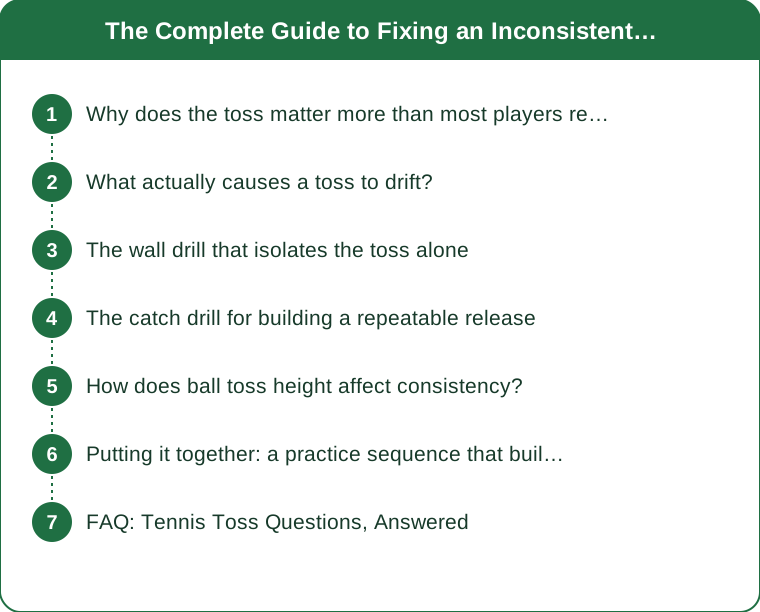
Why does the toss matter more than most players realize?
The serve swing is essentially a fixed, practiced motion — but it can only be consistent if the ball reliably arrives in the same spot in space. When the toss drifts even 6-8 inches from rep to rep, the body has to unconsciously adjust the swing to reach it, which is exactly what produces the inconsistent results players usually blame on their swing mechanics instead.
This is why toss consistency, not swing power, is usually the first thing serious coaches address with players who have an unpredictable serve.
What actually causes a toss to drift?
Active fingers instead of an open palm at release is the most common cause — if fingers flick or push the ball at release, that adds unpredictable spin and direction. The toss should leave the hand from an open, relaxed palm, more like placing the ball in the air than throwing it.
Bending the tossing elbow during the motion is a second common cause — a toss arm that stays nearly straight from shoulder to release point is far more repeatable than one that bends and extends inconsistently.
Rushing the toss to match a fast swing tempo is a third cause — tossing too quickly often means releasing before the arm reaches full, controlled extension, which introduces variability in both height and direction.
The wall drill that isolates the toss alone
Stand facing a wall or fence, close enough that you’d hit it if you swung. Practice only the toss — no swing — aiming for the same spot in the air 20 times in a row. Watch where the ball would land if you let it drop; it should land in nearly the same spot on the ground each time.
This isolates the toss from the pressure and distraction of a full swing, which is exactly why it works — most players never practice the toss alone, only as part of the whole serve, so they never get clean repetition on this one specific movement.

The catch drill for building a repeatable release
Toss the ball as you normally would, but instead of swinging, let it drop and catch it in the same hand at roughly shoulder height. A consistent toss produces a catch in nearly the same spot every time; a drifting toss produces catches that are impossible to predict.
Do 10-15 reps focusing only on the feeling of an open-palm release with a straight arm. Many players find their toss visibly stabilizes within one practice session using just this drill, before ever picking the racket back up for a full serve.
How does ball toss height affect consistency?
A toss that’s too high (well above full racket extension) gives the ball time to drift sideways in the air before contact, especially in any wind. A toss that’s too low forces a rushed, cramped swing.
The generally recommended target is a toss that peaks just slightly above where your racket makes contact at full extension — high enough for a clean, unrushed swing, low enough that it doesn’t have time to drift off-line before you hit it.
Putting it together: a practice sequence that builds lasting consistency
Session structure: 20 toss-only reps (wall drill) → 15 toss-and-catch reps → 10 slow-motion full serves focusing only on toss placement, ignoring power entirely → normal-pace serves once the toss feels repeatable.
Repeating this sequence 2-3 times a week for several weeks is what actually builds lasting consistency — a single session rarely fixes a habit that took months or years to form. Filming your toss from the side (not the front) also reveals drift that’s hard to feel in the moment but obvious on video.
FAQ: Tennis Toss Questions, Answered
How high should a tennis serve toss actually go?
Just slightly above your fully extended racket contact point — high enough for a smooth, unrushed swing, not so high that it has time to drift off-line before contact.
Why does my toss drift more on windy days?
A toss that’s already inconsistent becomes far more exposed on windy days because there’s more time for the ball to move off-line — fixing the underlying toss consistency also reduces how much wind affects your serve.
Can toss problems really be fixed without a coach?
Yes, for most recreational players — the wall drill and toss-and-catch drill isolate the exact mechanics well enough for self-correction, though video review helps catch drift you can’t feel yourself.
TL;DR:
- Toss drift, not swing mechanics, is the root cause of most inconsistent serves
- Release from an open palm with a straight arm — active fingers and a bending elbow cause drift
- The wall drill and toss-and-catch drill isolate the toss for focused practice
- Repeat the practice sequence 2-3x weekly for several weeks — one session won’t fix a long-standing habit
See It in Motion
Seen here: UPF 50+ Pleated Running Skort with 26” Leggings & Pockets — shop similar styles on bubblelime.com
Keep Reading
This article is for general informational purposes only and is not medical advice. It is not a substitute for professional diagnosis or treatment. Always consult a qualified healthcare provider about your individual situation, especially before making significant changes to your diet or exercise routine.